
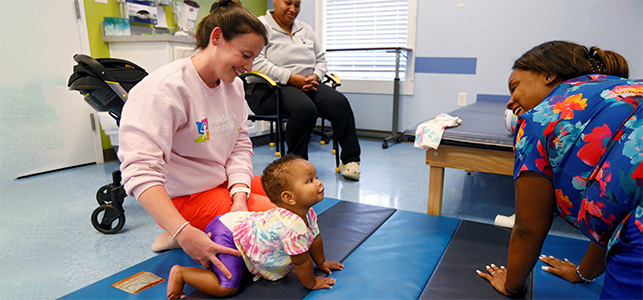
4 questions with a pediatric physical therapist
Whether rehabbing a running injury or recovering from stroke or surgery, it’s not uncommon for adults to have physical therapy appointments – but there are many cases when PT can be advantageous for kids too.
Anisha Craft, physical therapist and manager at our Petersburg Therapy Center, explains how she and her colleagues help kids of all ages.
Are there certain medical diagnoses with symptoms that can be improved through physical therapy?
Absolutely! In addition to helping kids recover from injuries, we also see children who have medical diagnoses such as autism, cerebral palsy, genetic disorders and autonomic disorders (conditions of the autonomic nervous system which controls involuntary functions such heart rate and blood pressure).
Physical therapy can help with:
- Balance and coordination
- Improved motor function, including gross motor skills such as walking, running and jumping
- Social skills and interaction by being able to sit up and interact with the environment better or through improved endurance
- Strength and flexibility
- Collaboration with the school to ensure supportive accommodations
- Posture
- Preventing secondary complications, like contractures or pressure sores, by addressing them early
Our goal is to help our patients participate in daily routines and enjoy being kids! We work with families too so they can build on what we cover in physical therapy sessions and support their children at home.
Physical therapy can also be beneficial for kids with developmental delay, right?
Developmental delay is a common reason children come to see us for pediatric physical therapy. It’s important to mention that every child grows and develops at their own rate, however, if you notice your child seems to be behind in attaining physical milestones, it’s a good idea to mention it to their pediatrician.
I know that often watching and waiting may seem like an appropriate approach, but the more we learn, the more we know how important it is to intervene early. Skills build on each other, and being behind in one thing can contribute to further delays. For example, delayed sitting has been linked to delayed cognition and social skills. Also, when kids are young, bones are ossifying, or becoming harder, and muscles can become tighter. A couple of diagnoses where it can be especially helpful to act early are torticollis (see more about this below) and toe-walking. Addressing concerns early can maximize function and flexibility, and prevent lifelong issues.
Do children need to be a certain age before they begin physical therapy?
We see patients from 0-21 years of age, including a lot of babies! A couple of the most common reasons we see babies are:
- Plagiocephaly is a condition where the head is misshapen or develops a flat spot on the side or back. It’s often the result of babies lying on their backs or with their heads turned to one side for many hours a day, even when awake (remember back to sleep, tummy to play!).
- Head tilt or rotational preference can be a sign of tight or shortened muscles in the neck – a condition called torticollis – and lead to flat head, posture concerns, asymmetrical muscle strength and delayed or asymmetrical milestones down the line.
In both cases, a physical therapist can help with exercises, stretches and repositioning recommendations.
What’s special about pediatric physical therapy?
Our pediatric physical therapists have Doctor of Physical Therapy degrees, so we’re well trained in the science behind addressing many different conditions. We specialize in caring for kids, which means we’re all about making therapy fun so they enjoy coming and get the most out of each session.
We also have a few types of specialty appointments, such as:
- Therapeutic massage, where physical therapists train caregivers on massage techniques to help with many problems, like pain, sensory regulation and even gut health.
- Durable medical equipment evaluations, where we evaluate what adaptive equipment may be appropriate for your child when commercially available equipment isn’t meeting their needs.
- Serial casting, where we apply soft casts to your child’s ankles/legs each week, stretching them a little at a time to gain more motion for children who walk on their toes.
With toys and equipment designed just for kids and passionate, knowledgeable therapists, our therapy sessions often feel like playtime – but rest assured, there’s a method behind each activity to help children gain strength and skills to help them today and as they grow.