
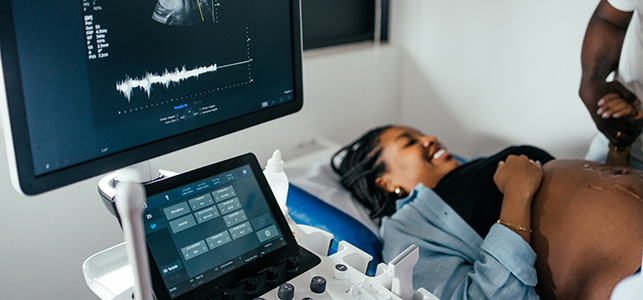
Seeing baby’s heartbeat is one of the most joyful moments of early pregnancy. The heart is one of the first organs to function, and it supports the growing fetus throughout development – then the baby, child and eventually adult from then on! With such an important job, your obstetrician will keep a close eye on it throughout pregnancy. If any concerns arise, they may recommend a fetal echocardiogram.
Dr. Dilli Bhurtel, our fetal cardiology program lead, explains how and why fetal echocardiograms are helpful.
What is a fetal echocardiogram?
A fetal echocardiogram, or fetal echo, is a specialized ultrasound that focuses on the heart of a developing fetus. During a fetal echo, we look at how the pieces of the heart fit together, the way the blood flows through the heart and the actual rhythm of the heartbeat. We usually aim to do fetal echoes between 18 and 22 weeks of gestation because the size and anatomical development are ideal for getting reliable, comprehensive images.
Why would I need a fetal echo?
There are a few reasons your obstetrician may recommend a fetal echo, including:
- An abnormality of the heart is suspected in a routine ultrasound
- Other, non-cardiac abnormalities are found in a routine ultrasound
- Congenital heart disease runs in the family, particularly in a parent or sibling
- The pregnancy involves monochorionic twins, or twins sharing a placenta
- Conception involved the use of fertility treatments
- Maternal health factors, such as diabetes, lupus or exposure to certain viral infections during pregnancy
The goal of a fetal echo is to identify any potential concerns before birth so your medical team can provide the best care during the remainder of your pregnancy, and we can work together to develop a plan for the delivery and care of your newborn baby.
What should I expect during a fetal echo appointment?
A fetal echo is non-invasive and doesn’t pose any health risks to you or your baby. It is conducted like a standard ultrasound you’re used to getting in your OB’s office. The sonographer will put gel on your abdomen and use a handheld device called a transducer to get images of your baby. The imaging takes about 45-50 minutes, then the sonographer will step out for about 15 minutes to do some calculations on the images and review the study with the fetal cardiologist.
The doctor will then review the results with you and answer any questions you may have. Sometimes we’ll recommend additional testing to confirm a diagnosis or watch for changes as the fetus grows. If additional appointments are recommended, our fetal coordinator will help make these arrangements, offering guidance each step of the way.
How should I prepare for my appointment?
On the day of your fetal echo, wear something comfortable that will allow easy access to your abdomen for the imaging. The room can get warm, so dressing in layers can also be helpful to ensure you stay comfortable.
You can eat, drink and use the bathroom as you normally would. You do NOT need a full bladder for this study. The only restriction is we ask that you do not have caffeine (coffee, soda, tea or chocolate), lots of sugary foods or a high carbohydrate meal right before you come in for your appointment. These tend to make your baby very active.
Who performs fetal echocardiograms?
We have a great team of sonographers, or ultrasound technicians, who specialize in fetal echocardiograms, so they’re skilled in getting just the right images to help us see all aspects of your baby’s heart. They then share these images with me or one of our other pediatric cardiologists who specialize in cardiac imaging – Dr. Kerri Carter, Dr. Zachary Goode or Dr. Andrew Reittinger – so we can review, make a diagnosis, and share as much information as possible with you and your obstetrician.
All the heart experts your baby may need right here at CHoR
Each year in Virginia about 800 babies are born with a congenital heart defect, or problem with the structure of the heart, but with early detection and the right care, they’re growing and thriving into adulthood.
Discover more about why your baby’s heart is in the right hands at CHoR.