
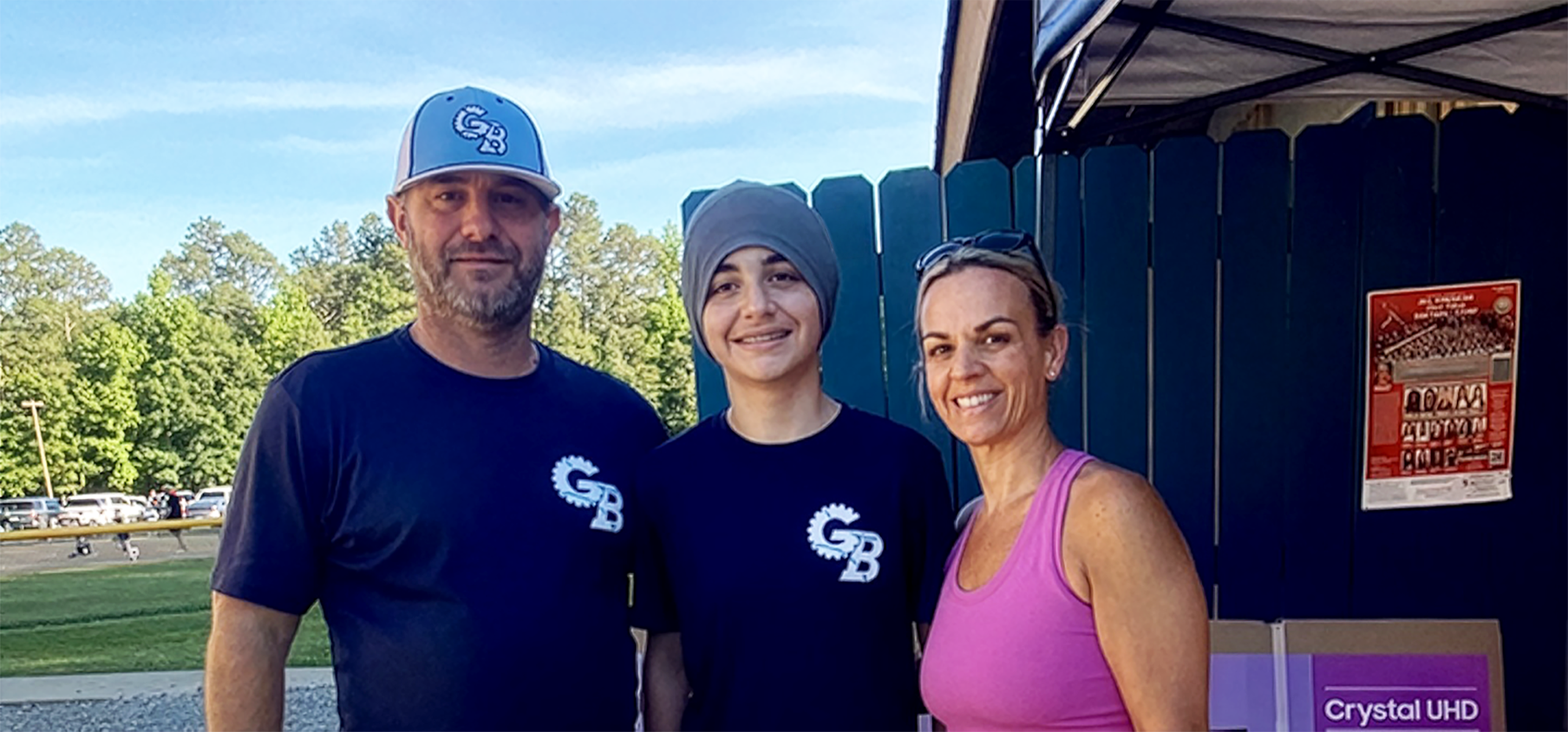
After an ATV accident left the then 13-year-old critically injured, he’s spent the past year defying odds and showing incredible progress every single day.
Just like most teen boys, Layne Jessie was looking for something fun to do while his parents were at work. He and a friend thought taking his family’s ATV for a ride through the neighborhood was the perfect way to spend the afternoon. But on that day back in May 2025, they didn’t grab their helmets before they headed out.
During the ride, Layne crashed on his street, hit his head on the asphalt and suffered a devastating head injury. The impact also caused him to break his wrist, several ribs and his scapula.
Layne’s friend acted quickly, calling Layne’s dad Wes while a neighbor called 911. An ambulance arrived, and due to the severity of Layne’s injuries, he was taken straight to CHoR’s Level 1 pediatric trauma center where his dad would learn just how severe his son’s injuries were..jpeg)
A CT scan showed Layne had a fractured skull, and the impact caused the bone to shatter and penetrate the brain. The result was an intraparenchymal hematoma, where bleeding happens within the brain tissue itself. He needed surgery to relieve the pressure, and he needed it fast. Layne’s mom Stacy arrived seconds before her son was rushed into surgery.
Dr. Gary Tye, one of our neurosurgeons, saw Layne for the first time in the operating room and remembered just how severe his injuries were.
“He had an open depressed skull fracture on the left side,” recalled Dr. Tye. “His pupils weren’t responding and there was a lot of swelling. He had significant damage to his skull including cuts to the brain.”
The first thing they had to do was quickly repair cuts to Layne’s face and ear because he was losing so much blood, then they were able to focus on the injuries to his skull and brain. Hours later, after parts of Layne’s skull had been removed to relieve the pressure, his parents learned that, for the time-being, all they could do was wait.
Dr. Tye sat down with them to explain what happened in surgery and answer all their questions.
“He told us the part of the brain that he damaged, where the accident happened, it was the motor skill side of the brain and the speech side,” remembered Wes. “We asked if he would ever be able to walk again, talk again or move.”
Dr. Tye explained to Layne’s parents that the next 24 hours were crucial, and it really depended on their son and how well his body responded to the surgery.
“He said, ‘it’s not a sprint, it’s a marathon,’” remembered Wes. “It was such a waiting game.”
“I thought we could get him through those initial hours, but I wasn’t sure if he’d ever talk again or what he would look like,” remembered Dr. Tye. “Having said that, he’s made an incredible recovery.”
Multiple brain surgeries and impressive progress
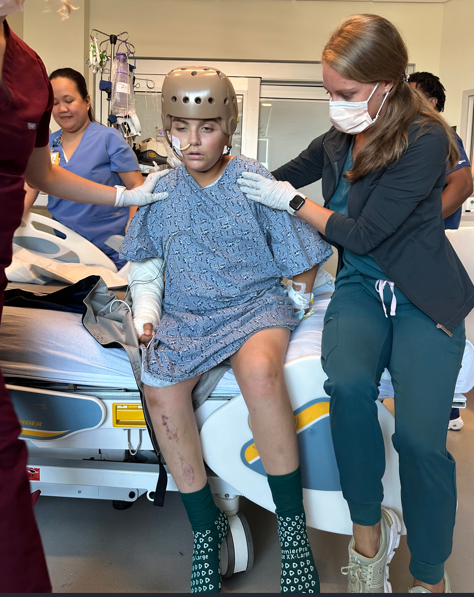
After Layne reached that initial milestone of 24 hours, they set another goal of 72 hours. The more time that passed, the greater the chance he would regain his ability to talk and move his right side.
After the initial surgeries, the swelling in Layne’s brain hadn’t subsided enough to replace his skull. He was required to wear a helmet for nearly a year as they awaited scalp healing and then Dr. Jennifer Rhodes, director of our center for craniofacial care, used saline implants to stretch Layne’s scalp to have enough skin to cover his skull once it was replaced.
After he was released from the hospital he started physical therapy. He showed so much progress in the first month, he was told he didn’t have to resume PT until after his skull surgery, when he would be allowed to do more rigorous exercises.
Restoring use of Layne’s right hand
Months after the accident, as Layne’s brain was still healing, his parents realized he had lost feeling in his right hand. Initially thinking it was due to the brain injury and broken wrist, they didn’t realize that it may have been caused by something different.
“He didn't have any feeling in the fingertips,” recalled Wes. “We were out hunting, and I realized his hand was ice cold and it was a different color, so we reached out to Dr. Tye.”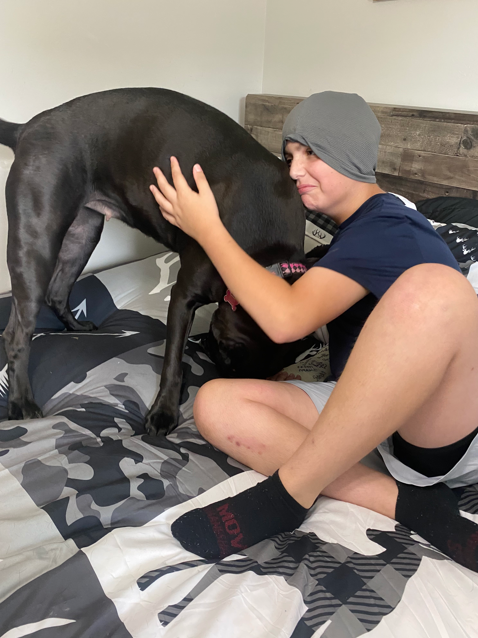
While it initially appeared that his hand was due to the wrist fracture and brain injury, it became apparent that he suffered a brachial plexus injury, which means the nerves that make the muscles of the arm and hand move were damaged. The nerves run from the spinal cord, through the neck and into the shoulder, arm and hand. Oftentimes, brachial plexus injuries can be caused in the birthing process when the nerves are pulled during delivery, but they can also be caused by trauma, like Layne experienced.
Dr. Jessica Lane, one of our other neurosurgeons, had assisted in surgeries immediately following Layne’s initial injury, and evaluated his arm for a possible nerve injury.
“Layne’s accident prevented him from using his right hand to do everyday tasks especially those involving fine motor control,” explained Dr. Lane. “He had a fair bit of hypersensitivity in the lower arm and hand and weakness in the muscles of the hand.”
She was hopeful surgery could help increase the use of his hand, allowing him to regain feeling and mobility. While his parents were a bit hesitant to have their son endure yet another surgery, they knew it could really help him.
“I am very happy we decided to the surgery,” said Stacy. “As parents, we wanted to do as much as we could to help his recovery, even if he only regained 5% mobility. But he’s seen a 20 to 30% increase and that number could continue to go up.”
Speech therapy
Aside from the physical obstacles Layne had to overcome, he’s been working hard to regain his speech. In the months following his accident, he started going to speech therapy twice a week and has seen huge improvements.
“It was hard for Layne to talk in complete sentences at first,” explained Stacy, “but now he can. While he still has some trouble finding certain words, he improves every time we get a progress report. The biggest struggle for him is knowing what he wants to say, but not always being able to get it out, but that’s getting better too.”
Rebuilding Layne’s skull.JPG)
A major milestone for Layne took place almost a year to the day after his accident: replacing the portion of his skull that had to be removed due to swelling. Before that day, he was told no running, jumping or rough housing and it was advised that he wear a protective helmet whenever possible.
The surgery was a huge success-- Dr. Tye said said they were able to preserve enough of Layne’s skull immediately following the accident, meaning he and Dr. Rhodes didn’t have to harvest any bone to rebuild the portion of missing skull. It will take 6 to 12 months for Drs. Tye and Rhodes to be certain that the bones of the skull have fused back together to adequately protect Layne’s brain, and as he approaches his 15th birthday in July, the biggest hurdles are now behind him.
Gratitude doesn’t even begin to describe how Layne’s parents feel about the care their son has received.
“I just want to thank everyone for all they have done for our family. They truly are amazing,” said Stacy. “We love everybody at CHoR!”
Wes whole-heartedly agrees.
“We owe everything to this place,” shared Wes. “These people do amazing work.”
Sometimes the signs of severe head trauma aren’t obvious. Learn when you should seek medical care after your child hits their head.
When minutes matter, our Children’s Trauma Center provides lifesaving care. Find out more.