
Protocols in place to keep our most critically ill patients safe
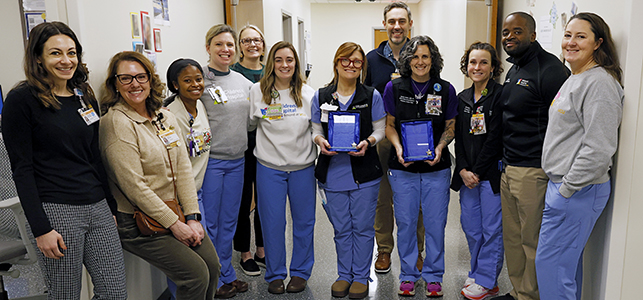
The team in our pediatric intensive care unit recently marked 2 years CLABSI free as a unit – an important and impressive milestone reflecting safe, quality care.
What is CLABSI?
CLABSI stands for central line-associated bloodstream infection, and poses a significant concern for patients in an intensive care setting.
A central line is an intravenous catheter that’s placed in a large vein to deliver medicine, fluids, additional blood and nutrition to patients in the hospital. It’s typically used when larger quantities of medications or fluids are given and/or provided over a longer period of time than a standard IV can support. The catheter is often in place for days or weeks.
CLABSI occurs when germs enter the bloodstream through the central line and can cause severe illness and longer hospital stays.
“Patients in our PICU are already battling significant health challenges. We’re committed to doing everything in our power to keep them safe from further complications,” said Karen Webb, DNP, associate chief nursing officer. “Our nursing team is vigilant about infection prevention and control, which includes hand hygiene, isolation precautions, sterilization and more. I am immensely proud of their dedication and commitment to the children and families who rely on us for this excellent care in critical moments.”
CLABSI free, one day at a time
Preventing infection requires attention to detail. Every minute adds up to days, weeks, months and, in this case, years of commitment to patient care and safety.
“This is a remarkable achievement for the PICU team who cares for our most critically ill children,” said Liz Peterson, director of quality, safety and analytics at CHoR. “These 2 years amount to over 4,600 central line days without an infection. During this time, the PICU has demonstrated an unwavering commitment to best practice and teamwork to ensure safe patient care. They are truly leading the way in quality and safety and should be so proud of this milestone.”