
Fellowships
Pediatric critical care fellowship
Children's Hospital of Richmond at VCU offers trainees a diverse education in clinical, administrative and research-based pediatric critical care medicine in a state-of-the-art facility.
For more than 28 years, our three-year fellowship program has trained physicians to:
- Practice in academic centers with expertise in multidisciplinary care and management of life-threatening illnesses in critically ill infants and children
- Address difficult ethical questions that arise in caring for critically ill and injured children
- Develop expertise in the organization, analysis, and preparation of scientific research
- Practice well-developed teaching skills for students at all levels
This fellowship program is accredited by the Accreditation Council for Graduate Medical Education and participates in the National Residency Match Program for pediatric critical care medicine.
Training, professional and educational opportunities
Fellows receive comprehensive, hands-on clinical training in the care of critically ill children. As a Level I pediatric trauma center, burn center, and regional referral center, fellows are exposed to a broad spectrum of critical illness and injury across medical and surgical subspecialties. We are a 24-bed combined pediatric and cardiac ICU and function as a closed unit, with all surgical patients co-managed by the critical care team in collaboration with the various surgical teams.
As fellows progress through training, they take on increasing roles in leading interprofessional rounds, managing acute scenarios, participating in hospital-wide emergency response, and supervising residents and other trainees. While maintaining patient safety, faculty strive to promote fellow autonomy and foster professional growth.
Required Rotations
- Anesthesia
- Cardiac ICU
- Pediatric ICU
Elective Rotations
- Cardiology/Pediatric Cardiac Catheterization Laboratory
- Pediatric Palliative Care
- Pediatric Pulmonology and Pulmonary Function Laboratory
- Pediatric Transport
- Radiology
- Toxicology
*flexibility for individualized curriculum based on fellow interests
The scholarly activity for the Pediatric Critical Care Medicine (PCCM) Fellowship at the Children’s Hospital of Richmond at VCU (CHoR) is designed to develop the investigative and teaching skills necessary for leadership in academic centers. Fellows are expected to produce a written work product—such as a peer-reviewed manuscript, grant proposal, or formal curriculum (in accordance with the ABP requirement)—and develop expertise in the organization and analysis of scientific research.
The program categorizes scholarly opportunities into the following three tracks:
- Basic, Clinical, and Translational Research
CHoR provides a collaborative and multidisciplinary research environment through the Child Health Research Institute (CHRI), which spans all pediatric specialties.
- Infrastructure and Resources: Fellows have access to a robust support system, including the Pediatric Research Office and the Pediatric Research Unit. To facilitate project development, the program offers a Student and Faculty Match Program and dedicated funding resources.
- https://www.chrichmond.org/research/
- Research Volume: The institution manages $16 million in grant funding from federal, industry, and investigator-initiated sources and provides access to nearly 150 active clinical trials.
- Specialized Expertise: The division and its collaborating faculty possess particular expertise in molecular biology and pathophysiology.
- Training and Outcomes: Fellows receive formal education in biostatistics, study design, and scientific writing.
- Medical Education
- CHoR is committed to developing the next generation of medical educators. Building teaching skills is a core goal of the fellowship. Formal Certification: Fellows can enhance their expertise through the VCU Graduate Certificate in Medical Education, a 12-credit-hour online program (TIME). This program focuses on adult learning, curriculum design, instructional strategies, and medical education scholarship.
- https://bulletin.vcu.edu/graduate/school-education/educational-leadership/medical-education-certificate/
- TIME Curricular Foundation: Coursework includes the theory and practice of adult learning, instructional strategies for health professions, and teaching as scholarship. Fellows learn to implement small-group or team-based learning, utilize digital media technologies, and adopt assessment and evaluation strategies.
- Practical Application: Fellows apply these skills by presenting at and leading weekly conferences, including journal clubs, chapter reviews, case conferences, and research meetings.
- Quality Improvement (QI) and Safety
CHoR is committed to institutional quality and safety initiatives, which are integrated into the fellowship experience.
- Data-Driven Process Improvement: As noted in the fellowship requirements, these projects target specific PICU processes. Examples include structured efforts to reduce unplanned extubation or optimizing focused patient care and associated protocols.
- Ethics and Safety: The curriculum includes instruction on the ethical and legal aspects of critical illness, ensuring that QI and safety projects are grounded in a comprehensive understanding of patient advocacy and hospital policy.
- Project implementation: Fellows identify and develop a substantiative project centered around process improvement or focus on specific outcome improvement.
- Institution wide scope: Scholarly activity in this track is often integrated into broader hospital-wide quality and safety initiatives, ensuring that fellow-led research contributes to the institution's overall mission of improving care for children
Fellows participate in a longitudinal educational curriculum designed to promote active learning and relevance to clinical practice.
Didactics
Fellows participate in protected, weekly faculty‑ and fellow‑led didactic sessions focused on:
- Pediatric pathophysiology
- Evidence based management of critically ill children
- Board review
- Biostatistics, study design, and scientific writing
- Quality Improvement
Educational formats include interactive lectures, case-based discussions, and flipped classroom approaches.
Simulation and Procedural Training
Fellows participate in a simulation curriculum throughout training, including:
- Scenario-based simulation
- Procedure‑based simulation
- In situ multidisciplinary mock codes
Simulation is used to reinforce clinical knowledge, procedural competency, teamwork, and patient safety in a psychologically safe learning environment.
Communication Skills Training
Fellows enhance their communication skills through simulation and in-unit experience with:
- Leading family meetings
- Delivering serious news
- End‑of‑life discussions
- Interprofessional communication and conflict management
- Feedback, teaching, and leadership skills
Conferences and Scholarly Development
Fellows attend and/or present at regularly scheduled conferences, including:
- PICU case conference (weekly)
- Cardiac surgery case conference (weekly, attendance only)
- Journal club (monthly)
- Morbidity & mortality conference (monthly)
- ECMO case review (monthly)
- Research and quality improvement meetings (monthly)
- PICU/PEM/PHM Interdisciplinary Conference (quarterly)
How to Apply
Applications should be submitted via the Electronic Residency Application Service (ERAS). The Critical Care Fellowship Program is accredited by the Accreditation Council for Graduate Medical Education (ACGME) and participates in the National Residency Match Program (NRMP).
Contact the pediatric critical care fellowship team
Division of Pediatric Critical Care
Children's Hospital of Richmond at VCU
Email: jesse.bain@vcuhealth.org
Children's Hospital of Richmond at VCU
Email: Kara.greenfield@vcuhealth.org
Alicia Beacham Email: Alicia.beacham@vcuhealth.org
Carmen Lancaster Email: Carmen.lancaster@vcuhealth.org
Richmond, VA 23298
Phone: 804-828-4080
Fax: 804-828-0645
Current fellows

Med school: University of New England College of Osteopathic Medicine
Residency: Brown University

Med school: Rutgers New Jersey Medical School
Residency: Duke University
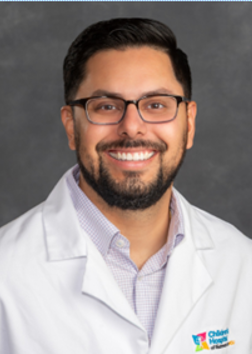
Med school: Lake Erie College of Osteopathic Medicine
Residency:Advocate Children’s Hospital
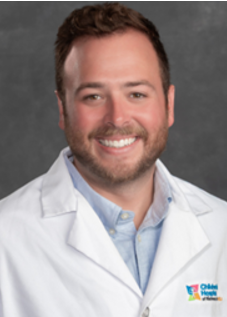
Med school: University of Miami Leonard M. Miller School of Medicine
Residency: Virginia Commonwealth University