
How the Family Resource Center works, why it’s important and what lies ahead
Healthy kids and families require more than great medical care. Food, transportation, utilities and more form an essential foundation for physical and emotional wellbeing. The Family Resource Center was created in 2023 to connect families with these resources and others they may need. Located on the Sky Lobby of the Children’s Pavilion, it’s been so well received that more space is needed to best support our families’ success.
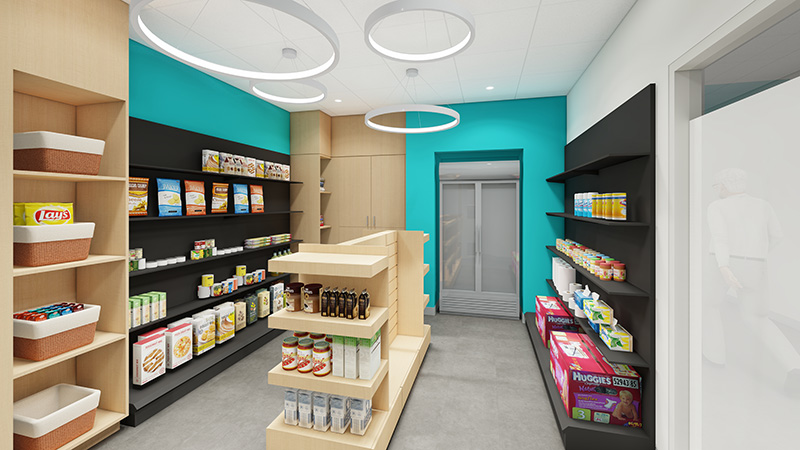 Construction is underway to expand the center with a larger footprint in the Children’s Tower. Scheduled to open this fall, plans for the bigger space include private meeting areas for families, workspace for community partners, a play area for children, a needs closet stocked with essential items and flexible space to welcome rotating services such as legal and financial counseling, a computer lab and teaching kitchen. The Family Resource Center – including the new physical space – is 100% operated thanks to philanthropic support.
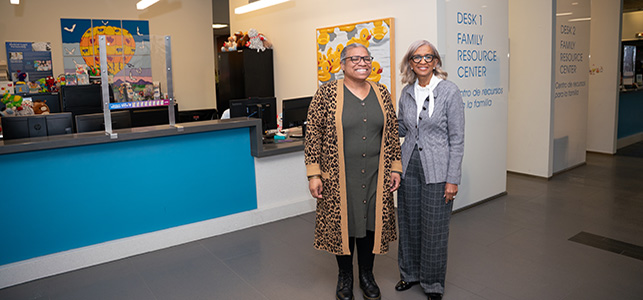
Kimberly Lewis (on right in photo above), director of outreach and administration for the Division of Community Health at VCU, is leading the expansion. She and Family Resource Center liaison Shavonda Joyner (on left in photo above), who connects families to resources while overseeing daily operations of the center, share more about their work and why they’re excited about what’s ahead.
Why was the Family Resource Center created, and what gap did it fill for families at CHoR?
KL: The Family Resource Center was created because many of the families we serve face challenges that can directly impact a child’s ability to receive care. A child might be prescribed a medication that must be taken with food—but what if that family doesn’t have consistent access to food? Our care teams have always responded to such needs but in a reactive way. The Family Resource Center allows us to be proactive by screening families when they enter the hospital, identifying challenges early, addressing urgent needs right away and working with families on longer-term plans that support their overall health and stability.
SJ: A pediatric patient is part of a family system. That entire family’s health depends on available resources, and if those resources are lacking, the whole family is at risk. We are in the business of healing families so that kids can thrive.
How does the Family Resource Center work in coordination with clinicians, social workers and community partners to support families seamlessly?
KL: Education and collaboration are key. Clinicians, nurses and care teams are regularly trained on the Family Resource Center and referral process. Nurses are truly our front line—screenings are built into the care experience. We also work in close partnership with social workers. The trust families build with our team often leads to deeper conversations, allowing us to identify more complex needs and escalate support quickly and seamlessly.
What excites you about what’s ahead for the Family Resource Center?
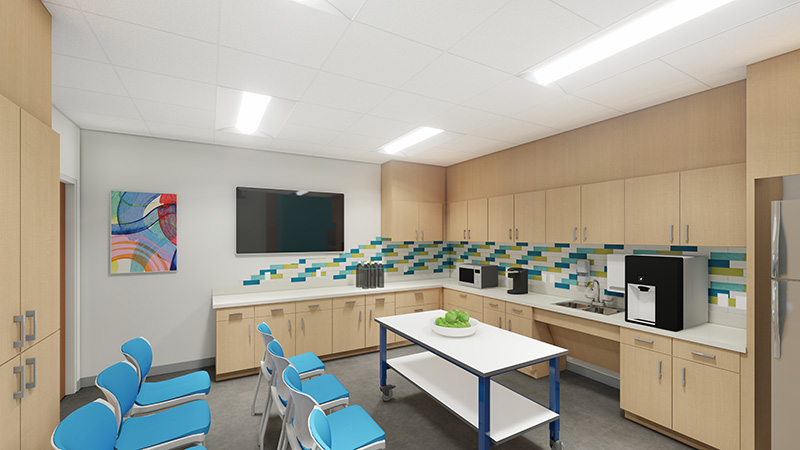 KL: We’re incredibly excited about the new dedicated space and the expanded programming and improved functionality it will make possible. But beyond that, what excites me most is the potential. Our families have significant needs, and our community consistently shows up when they understand how they can help. This is just the beginning of how we can work together to create a healthier community for children and families.
How does philanthropy and community support impact the Family Resource Center?
SJ: Philanthropy and community support fuel the work. We can’t exist without it. It is incredible to come to work knowing you are going to touch lives and help people at a critical time. And we get to do that because of the philanthropy behind the scenes.
Check out all the resources designed to support patients and families at CHoR.