
Getting a clear picture of what your child can see before they’re able to talk is tricky. Ophthalmologist Dr. Evan Silverstein answers these 7 questions about what can help parents bring their child’s potential vision problems into focus.
Many children experience vision problems before they’re able to describe what they can see. How can parents determine if a small child has vision problems?
If a child has a vision problem and can’t verbalize it, you may see several different things:
- squinting and moving closer to things
- turning their head to the side and looking out the corner of their eyes
- eye crossing or drifting
Sometimes you won’t notice anything, which is why vision screening at your pediatrician becomes very important.
What are the most common vision problems kiddos experience?
The most common vision problems include refractive errors like myopia (near-sightedness), hyperopia (far-sightedness) or astigmatism (when the eye is shaped more like a football than a round ball causing blurry or distorted vision). We also see a lot of instances of strabismus where the eyes don’t align properly like esotropia (eyes turning in) and exotropia (eyes turning out).
What methods do you use to determine what’s causing the vision problem before children can describe what they can see?
The best method is instrument-based vision screenings at your pediatrician’s office. These devices can estimate/measure refractive error, eye alignment and other issues with a "picture" without your child having to read an eye chart.
What advice do you have for parents who may need to get their small children used to wearing glasses?
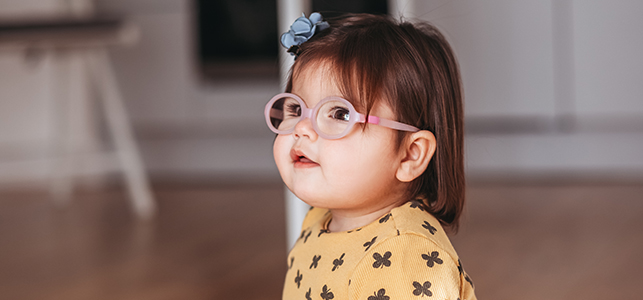
I am careful about prescribing glasses. I only prescribe them for children who really need glasses to prevent amblyopia (when the brain can’t see well out of one or both eyes) and when it will really help their day-to-day vision. Therefore, when I prescribe glasses, children usually want to wear their glasses because their vision is so much better. There are, however, some children who won’t wear their glasses. I like to try to tie a child’s favorite activities to wearing glasses. When the glasses go on, their favorite activity comes out! When glasses come off, activity goes away.
Are there other treatments besides glasses to correct vision problems?
Yes, sometimes surgery is needed, but other times we need to improve vision in one eye by helping the brain to see better (treating amblyopia). We can do this with patching, using eye drops or video-based treatments like dichoptic training (presenting a different image or visual stimulus to each eye at the same time). The video-based treatments can be with a VR headset or an eye-tracking tablet.
What other eye issues should parents be aware of?
An increasing number of children are becoming nearsighted (myopic). Please make sure your child gets outside 2+ hours per day, limit device use, keep devices farther from your child and abide by the 20/20/20 rule: every 20 minutes they are doing work that requires them to look at something up close, take a 20 second break and look 20 feet away.
Flash photography can sometimes help parents spot problems with their children’s vision or eye health—what should parents watch out for?
Although this is becoming less common with red-eye deletion software on cameras, you still should be looking out for unequal red-reflexes in the pupil in both eyes. If one eye looks different than the other, contact your pediatrician or eye doctor.