
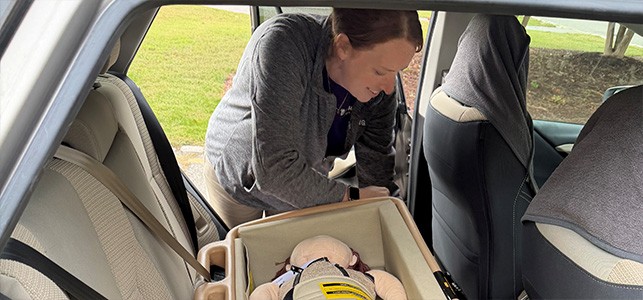
Child Passenger Safety Week just wrapped up, but CHoR works year-round to ensure more providers know exactly what to do when commercial car seats can’t accommodate kiddos with certain medical, developmental or muscular conditions.
Installing a car seat properly is a big hurdle for many families, but there are some who struggle to find a way to safely transport their kids. That’s because many children are born premature, rely on casting for a significant period or have medical needs that require a special seat to even leave the house or hospital.
Safe Kids Virginia provides invaluable training
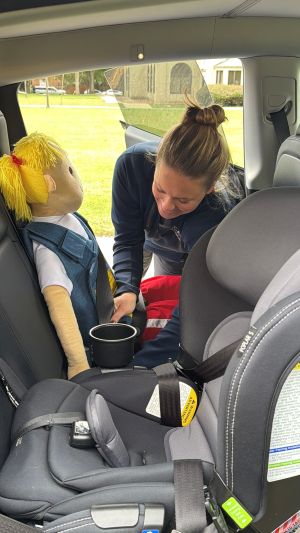
So where can they turn for help? There aren’t a lot of options for parents, and Safe Kids Virginia is working to change that. CHoR’s injury prevention program sponsors a course for providers across the state, not just those who work at CHoR, to train them to be able to assess children with medical and behavioral needs, find the right car seat for them and teach caregivers proper use.
“We want to make sure that every parent or caregiver feels comfortable and confident transporting their little one safely,” shared Corri Miller-Hobbs, CHoR’s injury prevention education and outreach coordinator and program coordinator for Safe Kids Virginia. “Sometimes they need more support or additional tools depending on their child’s medical needs, and we are here to provide both.”
What better time to provide outreach than Child Passenger Safety Week to ensure providers have everything they need to support the parents of their patients?
The course, which took place on September 23 and 24 at CHoR’s Brook Road location, included nearly a dozen trainees, some from CHoR, but also providers from multiple other hospital groups and Virginia’s Department of Social Services. Many of the attendees have encountered issues with safe transportation in their own lives and know firsthand how frustrating it can be.
Michelle Froede is one of our physical therapists, specializing in assistive technology. Before now, she was the only Safe Travel for All Children certified instructor in the Richmond area. This year, Allison Stevens, an occupational therapist from our Bon Air location, joined the ranks of instructors and was able to help teach the class for the first time. Michelle knows it is hugely beneficial for both patients and providers in our area.
“Before now, we couldn’t independently host training because we didn’t have enough STAC instructors on staff,” explained Michelle. “Now we have the capability to teach more providers how to keep all little ones safe in the car and on the road.”
Adapting car seats to every possible medical scenario
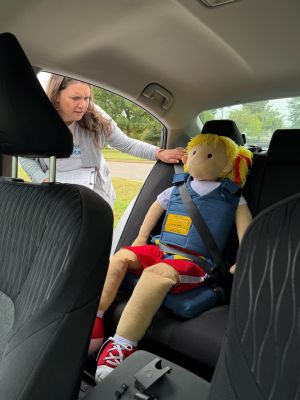
The scope of scenarios these providers train for is staggering. Some children have behavioral issues where they can get free of their restraints. Others have developmental delays or neuromuscular disorders which can lead to poor head and torso control yet they can grow too large for the conventional car seats and still need the extra support. Providers even learn what to do it they need to find an appropriate car seat for conjoined twins.
Eileen Gerling, an occupational therapist who has been teaching the course for decades, is the child passenger safety coordinator at our partner hospital, Children’s Hospital of the King’s Daughters. She is not only an expert in her field, she also has a direct line to a car seat engineer and will regularly reach out to get advice for specific kids with unique needs. When necessary, they will jump on a video call so he can give his expert advice on how to safely adapt car seats for kids with needs they haven’t encountered before.
Being there for families trying to protect their precious cargo is the best part of the job for these providers.
“If we can provide families with the answers they need so they can get out and enjoy the world with their children, while keeping them safe, it makes the work so fulfilling,” Miller-Hobbs said.