
She’s dedicated decades to her child life career and the kids and teens in her care. Heather Rossi explains her professional philosophy and what it means to be the 2026 Mary Barkey Clinical Excellence Award recipient.
.jpg) When kids are in the hospital, one person can make all the difference. It may be the surgeon who performed a complex operation, or the nurse who administered medicine with a smile around the clock. It many cases, it’s a child life specialist who comes into the equation with a slightly different approach, ensuring understanding and comfort to facilitate coping. Heather Rossi, a certified child life specialist currently working with pediatric patients in the Evans-Haynes Burn Center, teen patients in the adult Trauma Center and loved ones in the Helping Children of Adult Patients program, has helped countless children throughout her nearly 28-year career across many units and services at CHoR/VCU Health.
When kids are in the hospital, one person can make all the difference. It may be the surgeon who performed a complex operation, or the nurse who administered medicine with a smile around the clock. It many cases, it’s a child life specialist who comes into the equation with a slightly different approach, ensuring understanding and comfort to facilitate coping. Heather Rossi, a certified child life specialist currently working with pediatric patients in the Evans-Haynes Burn Center, teen patients in the adult Trauma Center and loved ones in the Helping Children of Adult Patients program, has helped countless children throughout her nearly 28-year career across many units and services at CHoR/VCU Health.
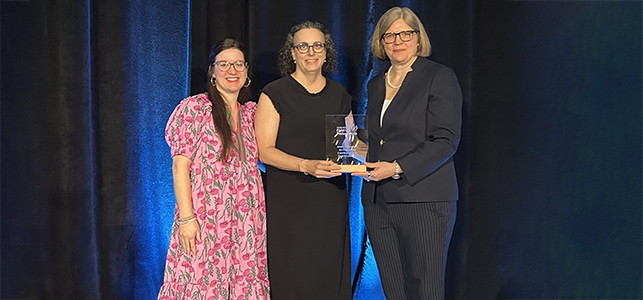
Recently, Heather was named the 2026 Mary Barkey Clinical Excellence Award recipient, an honor given annually by the Association of Child Life Professionals to a child life specialist who has demonstrated exemplary care and a high level of clinical skill. Heather explains her child life career, how she cares for kids and families, and the heart behind this honor.
How did you learn about the field of child life and when did you know you wanted to be a child life specialist?
I’ve known about child life since I was 14. My youth group supported a camp for kids with cancer in St. Louis, Missouri. The two local children's hospitals sent kids to the camp and one of the child life specialists attended as well.
During a group activity, one of the teenagers got upset. He walked away and everyone kind of looked around like, what’s going to happen? Then the child life specialist got up and went with him. I knew she worked at the hospital and was not a medical person. I thought, whatever her job is, that's what I'm going to do – and then I never wavered from that.
I recently found her on social media and reconnected with her. It was really amazing to be able to tell her that I got into the field because of her and have stayed in it all these years.
How does child life help bring the perspective of the child into decisions made in the hospital?
Child life specialists have a unique perspective. Kids and families are often comfortable sharing information with us because of the nature of our role and how we’re able to interact with them. This affords us opportunities to advocate for them. I may be able to suggest a different approach for placing an IV or for beginning a procedure based on what I know about that child.
I also want kids to be confident advocating for themselves. I worked with a teen in the trauma unit for months. When I came back from a week of vacation, her mom said, “Sometimes I can hear your voice when she's telling the staff what she wants or doesn't want – and she would never have done that before. She would never have spoken up for herself like that. Sometimes it’s verbatim things you've said on her behalf and I can just tell she's taking a page out of your book.”
That’s the biggest compliment because the goal in child life is not to create a need for us to be present for everything, but to help patients understand they can do hard things and advocate for themselves. They have a voice and they’re allowed to use it.
Through the HCAP program, you work with kids who have an adult family member facing a challenging medical circumstance. How do you approach tough conversations about what’s going on?
There’s a lot of prep work that goes into these delicate situations before I even meet the child. It can include conversations about the child’s developmental level, what they already know about the situation or how they cope best. I also never go anywhere empty-handed. I always have my backpack with a few key things – a light spinner, Play-Doh, cards, stress balls. I always have good tissues as well.
I really try to engage kids in some sort of interaction and play before I'm having any serious conversation with them. If I sat down and said, we need to have a really serious conversation, it'd be over. They’d be tuned out. They're scared. They're overwhelmed. They're like, who's this strange lady? I don't want to talk to her.
I don't ever expect a kid (or teen, actually) to give me their full attention. Having their hands busy (with something that is familiar, normalizing and fun) means they are generally more able to tune into what I’m saying. The other thing about kids is that they often take in and process information the same way they eat. They take a little bite, they get up and walk around, they take a bite, they get up and walk around. They need the time and space to process in the way that works for them. So I mix play and conversation about topics that interest them in with the questions I’m asking them and the explanations I’m providing.
One of my favorite parts of my job is helping adults be honest with kids in a way they can understand. This helps them feel included and have trust in their adult family members and the healthcare team.
How do you keep from becoming overwhelmed by the situations you face every day?
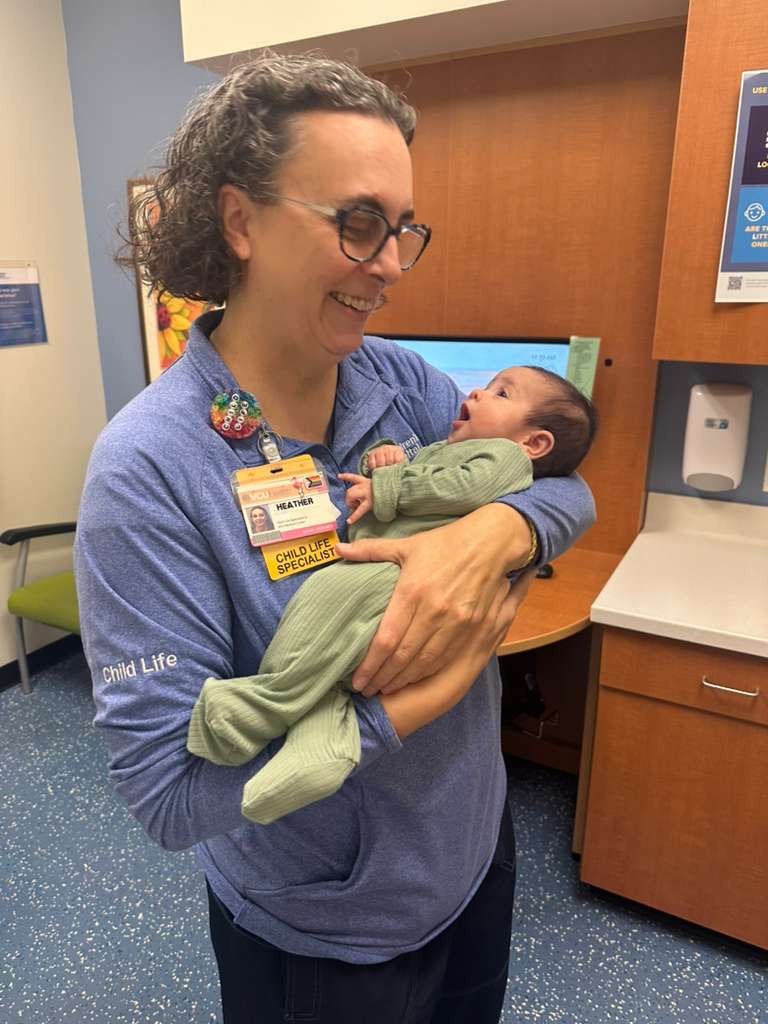 I’m not often overwhelmed by difficult situations in the hospital. Most of the time, it doesn’t feel overwhelming to me because I can see the difference child life support makes for a family. If I were to watch the news, I would see lots of negative things people are experiencing and have no ability to do anything about it. When I come to work, I also see people experiencing difficult things, but I have an opportunity to impact it.
One thing I hang onto which helps me feel balanced and not overwhelmed emotionally (most of the time anyway) is the hope that they will carry something we did or talked about away from our interaction. It’s my hope to share something with them that will help them to cope both in the moment with whatever their family is going through, but also in the future. The HCAP program allows me to impact children in the heart of their family crisis while a loved one is actually in the hospital, but is not long term support or therapy. I hope I’m able to provide them with an experience that has a positive lasting impact. For me, that helps balance the hard stuff.
You’ve been in your current role since 2024. How is it different from what you've done previously in your career, and what attracted you to this position?
For most of my career, I worked with kids in the pediatric acute and intensive care units. After that I spent years doing a little bit of everything – helping to expand the team to new areas of coverage and managing special projects, including being very involved during the design process for the Children’s Tower.
It had been almost a decade since I was dedicated to a specific unit. Then this role helping teens in our trauma unit and children whose adult loved ones are in the hospital came up and I knew it was something I wanted to do. I’ve worked a lot with patients recovering from traumatic injuries and I’ve always enjoyed helping the children of adult patients. That's one of my most treasured parts of my job, so this role just seemed like an obvious transition.
It’s very different to be in the adult hospital exclusively now. The children of adult patients and adolescent trauma patients are all in adult units, with team members who don’t specialize in working with children. These team members are often hungry for guidance and direction on how best to approach caring for children and teens and I’m always happy to provide that. They’re usually very happy to see me, so that’s always nice!
The burn unit team does have training specific to pediatric patients, but even there I’ve found them to be very open and welcoming to any new or unique approaches I’ve suggested. Every team member I’ve encountered in these primarily adult units wants to do what’s best for these kids and their families and that end goal matters so much.
What advice do you give to students and colleagues who are just beginning their child life careers?
One of the things that I always try to impress upon students and new team members in child life is that nothing we do here is about us. It's always about the patient and the family. It's about hearing them, being on their timeline, understanding what it is they need and being someone they can feel safe with. That philosophy puts us in the position to do a lot of advocating and to really make patient and family centered care our focus as child life specialists.
What does it mean to you to be the 2026 Mary Barkey Clinical Excellence Award recipient?
It's really overwhelming. It's a massive undertaking to nominate someone for this award and to know that two of my coworkers each had 15 pages worth of amazing things to say about me, and they were willing to put in the time and effort, was really special.
When I got the phone call months later from the president of the Association of Child Life Professionals telling me that I had won, I was literally speechless. She told me and then I was just silent. She said, “Are you still there?”
I attended the annual conference at no cost to receive the award and speak. There I was in a gigantic ballroom at a historic hotel in Chicago in front of 800 other child life specialists. The hospital made a video that I hadn’t seen before it was up on the big screen. It was really an incredible moment.
It really feels like a lifetime achievement award. The ACLP has only been giving this award since 2010. In 2020, one of my mentors from my internship received it and she was at the conference this year to see me receive mine. I’ve always held her in high regard, so to be up there with her was kind of hard to believe. Being recognized in that very public way was humbling for sure, because there's so much good work being done by so many people in the field of child life.
Watch the CHoR and VCU Health teams congratulate Heather on her award
Child life makes a life-changing difference in our hospitals and clinics. Learn more about our growing team and how they make the magic happen.