
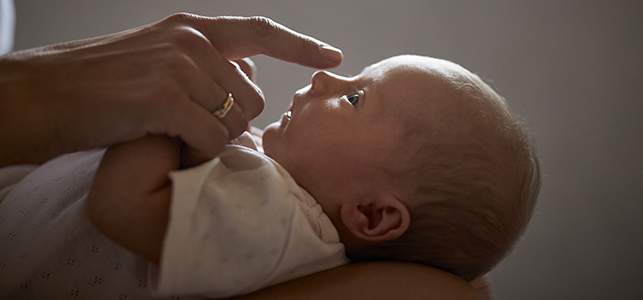
A pediatric hepatologist explains the vaccine – and the life-threatening liver condition it protects against.
The hepatitis B vaccine is one of the most successful medical advances of the past half century, said a pediatric hepatologist with Virginia Commonwealth University and Children’s Hospital of Richmond at VCU.
Once a child is infected with the hepatitis B virus, there is “no curative therapy, at all, with a greater than 90% chance of leading to a chronic lifelong infection,” said Saul Karpen, M.D., Ph.D., who is also the chief scientific officer of the Stravitz-Sanyal Institute for Liver Disease and Metabolic Health. The virus can cause acute illness shortly after infection or, more often, it can lay dormant for decades before causing illness and even death.
Immunizing newborns against the virus can bestow lifelong immunity. Without it, as many as 9 in 10 infants infected with hepatitis B in their first year of life will develop chronic infection that can lead to liver failure and cancer, according to the National Center for HIV, Viral Hepatitis, STD, and TB Prevention.
An estimated 17,827 infants were born in 2021 to mothers infected with hepatitis B, or HBV, according to the U.S. Centers for Disease Control and Prevention, but because of the vaccine, only about 3,000 people a year are diagnosed with hepatitis B.
Infections with the virus in children and teens have decreased by 99% since 1991, when the hepatitis B vaccination was incorporated into the routine childhood vaccine schedule, the CDC says.
The HBV vaccine, like many others in the childhood immunization schedule, is so efficient at preventing disease, Karpen said, “that it should make you feel like you’re wearing a Superman cloak.”
Dr. Karpen explains why immunizing newborns against the hepatitis B virus is so crucial.
How might newborns be infected with the hepatitis B virus?
It’s easy to transmit through pregnancy, the birth process, blood, and it can be transmitted sexually or through contaminated needles. Newborns are infected most often at birth to infected mothers. If an infant is known to be born to a mother infected with the virus, they can be given the vaccine and a special anti-HBV antibody treatment within a few hours after birth.
Another very real challenge is that, because people may not know they have hepatitis B for many years, they can unknowingly spread the virus to others – including a parent or other adult sharing it with a newborn in their care. Vaccination is the best protection against this.
How does a pregnant woman know she might be infected?
In chronic hepatitis B infection, many people are unaware that they have it since symptoms are often subtle. Screening of pregnant women for HBV infection helps to give doctors an opportunity to interrupt disease transmission by providing the vaccine to their newborns.
How successful has the vaccine been?
It’s been one of our dreams to eliminate hepatitis B, and universal vaccination around the globe has been one of the hallmark successes of late 20th century medicine.
What would you tell a neighbor who is pregnant about hepatitis B and immunization?
I am grateful for the conversation. What I would say applies to all the childhood vaccines. I would first outline that science and vaccinations have made our society safer over the past 50-plus years, in ways that our ancestors wish were available in their lifetimes. We are all healthier because of vaccines. Follow the guidance of long-trusted sources of information, such as the American Academy of Pediatrics and state health agencies.
Find more helpful health information for your family.
By A.J. Hostetler