
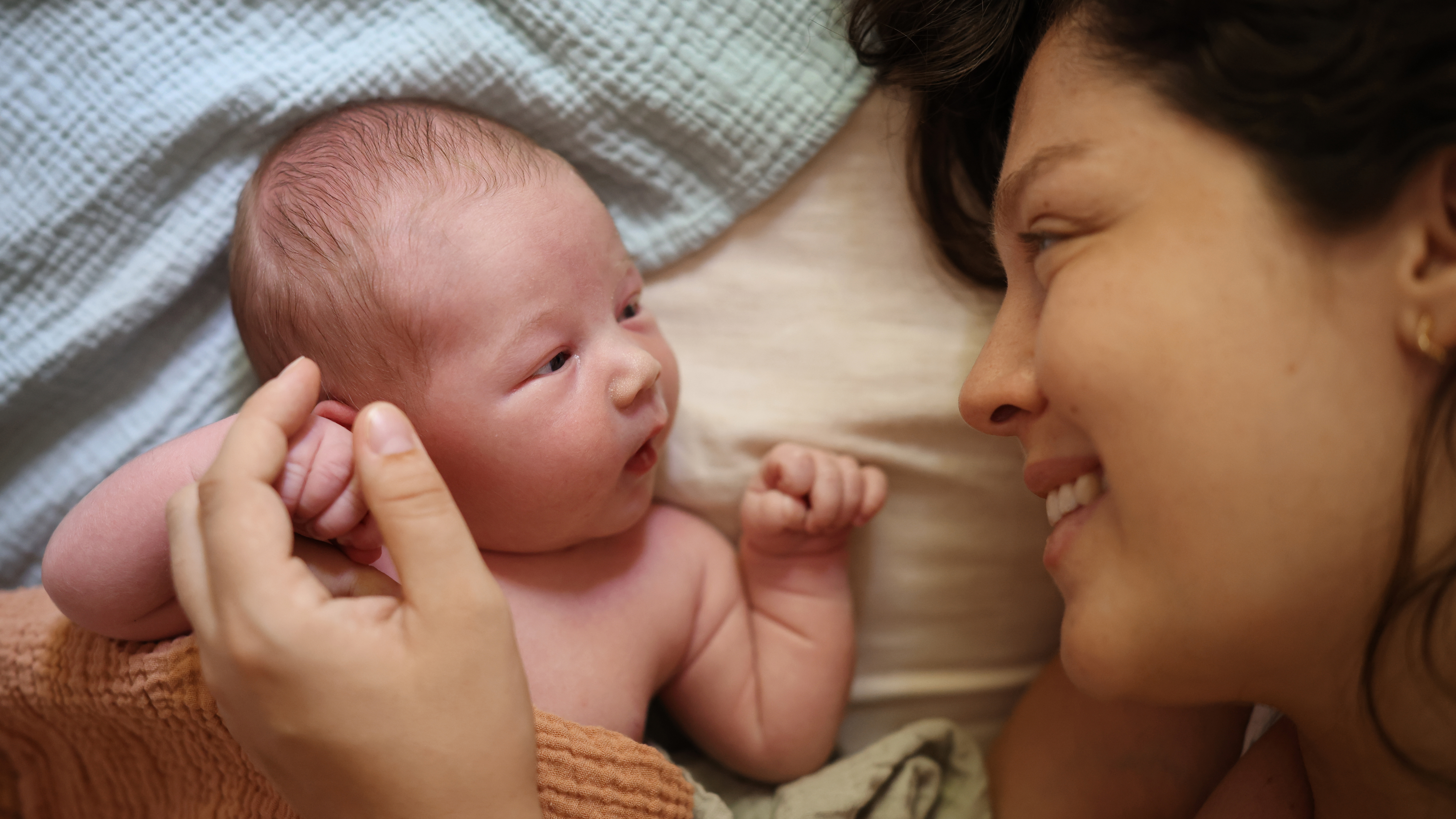
New babies undergo several routine screenings shortly after birth including a hearing test. Our newest ear, nose and throat surgeon, Dr. Ebone Bady answers these 5 questions about the hearing screening and what happens if your little one doesn’t pass.
How are hearing screenings conducted in newborns?
The test is typically performed within the first 24–48 hours of life using a test called otoacoustic emissions (OAE), which evaluates part of the inner ear (the cochlea). It’s performed by a health care professional specifically trained to conduct the test, involves several steps and can take between 5 and 30 minutes to complete.
• The baby is placed in a quiet environment (either parent postpartum room or a nursery).
• The baby is soothed to ensure they are calm for the exam.
• A small probe is placed in baby’s ear canal or over the external ear.
• Sound stimuli are sent into the ear, and the device picks up on your baby’s ear response.
If my baby doesn’t pass the newborn screening does that mean they have hearing loss?
A newborn hearing screening is just that: a screening, not a diagnosis. While it’s a great tool for early identification, it does not detect all types of hearing loss and can produce false positives.
Common reasons a baby may not pass include:
• Debris in the ear canal (like bodily fluids or tissue from the birthing process)
• Vernix (a normal newborn coating) in the ear
• Fluid in the middle ear (such as residual amniotic fluid)
• A noisy testing environment
• A fussy or moving baby
• Technical problems with the equipment or human error
Many of these are temporary and resolve on their own and many babies who don’t pass the initial screening will go on to pass later. Both scenarios should be taken seriously and having a plan can help reduce fear and uncertainty.
Is another hearing test performed to confirm results?
Before leaving the hospital, you can ask for a repeat test. If you are unable to get one, a referral to audiology should be placed. This next hearing test will likely be a diagnostic hearing exam called an auditory brainstem response, which should be performed by 3 months of age.
If my baby does have hearing loss, what happens next? How can a pediatric ENT specialist help?
If hearing loss is confirmed, care becomes a team effort--
Families typically work closely with:
• A pediatric ENT specialist (Lead physician in a hearing loss patient, who helps coordinate all the teams,
orders consults and imaging and follows hearing health long term)
• An audiologist
• A geneticist
Further evaluation may include:
• Imaging to assess ear structures and the cochlear nerve
• Genetic testing to identify inherited or spontaneous causes
• Testing for congenital cytomegalovirus (CMV), a common infectious cause of hearing loss
If CMV is identified, additional specialists like infectious disease and ophthalmology may be involved. Additionally, in some cases of genetically linked hearing loss other specialists like cardiology are needed.
From there, we determine the best form of hearing rehabilitation, which may include:
• Hearing aids
• Cochlear implants
• Bone-anchored hearing devices
Families are also connected with resources, including early intervention programs, speech therapy and communication options such as American Sign Language, or ASL.
How can I support my child as they grow?
If your child has hearing loss, early intervention should begin as soon as possible (ideally by 6 months of age). This is critical because the brain and auditory system need sound input to develop properly.
Early access to sound supports:
• Speech and language development
• Cognitive development
• Social interaction
The earlier a child begins using hearing devices or communication strategies, the more natural and effective those skills become.
Sometimes hearing loss isn’t identified until a child is a little older. Routine hearing screenings at your child’s primary care physician and school will be conducted, but as a parent you are their biggest advocate. You should monitor your child’s language progression because this is one of the first big indicators of hearing loss. If you notice something, touch base with your PCP and request a hearing test if appropriate.