Before splashing around to cool down, take a moment to review water safety with your family.
Summer’s back! Safety is essential any time kids are around water, but if your family’s summer travels will take you to a lake, river or ocean, there are some extra precautions to consider.
Special safety considerations for open water
Bodies of open water – as opposed to controlled swimming pools – come with additional risks that can make it easy to get in over your head, such as:
- Changing tides
- Fast-moving currents and waves
- Limited visibility
- Uneven surfaces and sudden drop offs
- Unexpected temperature changes
- Unknown depths
Before allowing children to enter the water:
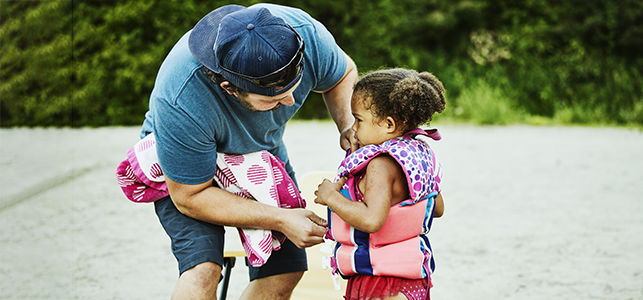
- Make sure they’re correctly wearing a life jacket – it should fit properly and be U.S. Coast Guard-approved.
- Get a feel for the temperature, currents, water depth, drop offs, etc.
- Look for any safety warnings about water conditions.
- Designate an adult water watcher to actively supervise without distractions.
Undertow and rip currents are hidden hazards specific to open water that can be dangerous and even deadly.
Undertow occurs when waves break on the shore and a broad current beneath the surface flows back out toward the sea. A strong enough undertow can make swimmers, especially kids, unsteady and even pull them under water.
Rip currents also flow away from the shore, but in narrow and powerful channels that are strongest toward the surface of the water. They often form in gaps in sandbars or near structures like jetties, piers or reefs. They’re more dangerous than undertow because the water moves quickly along a localized channel, and can carry a swimmer far offshore. Fighting this strong flow can rapidly lead to exhaustion and eventually drowning.
“Rip currents sometimes appear as calm water between waves, even in shallow spots, deceiving swimmers into thinking everything is fine,” said Corri Miller-Hobbs, RN and Safe Kids Virginia program coordinator. “Water – and especially open water – is not the place to let your guard down. It’s essential to be knowledgeable about potential dangers and how to handle them.”
Rip current safety at a glance
In addition to the standard open water precautions, the National Oceanic and Atmospheric Administration provides the following tips for rip current safety:
- Know how to swim. Rip currents can be dangerous even in shallow water.
- Be aware of the risk level. The NOAA provides rip current forecasts and risk levels for public awareness.
- Stay at least 100 feet from piers and jetties.
- Never swim alone, regardless of how good a swimmer you are.
With older kids and teens who are strong swimmers and may become more adventurous in the water, review what to do in the event of getting caught in a rip current.
- Stay calm – Fighting the rip current can cause panic and exhaustion.
- Swim parallel to the shore until you’re no longer in the current.
- Remember that rip currents pull you out, not under. Instead of swimming, you could float or tread water until the current passes and you’re able to swim to shore.
- If you’re concerned about making it to shore, draw attention to yourself so others can help.
Keep this open water information in mind when boating, kayaking or participating in other water activities as well.
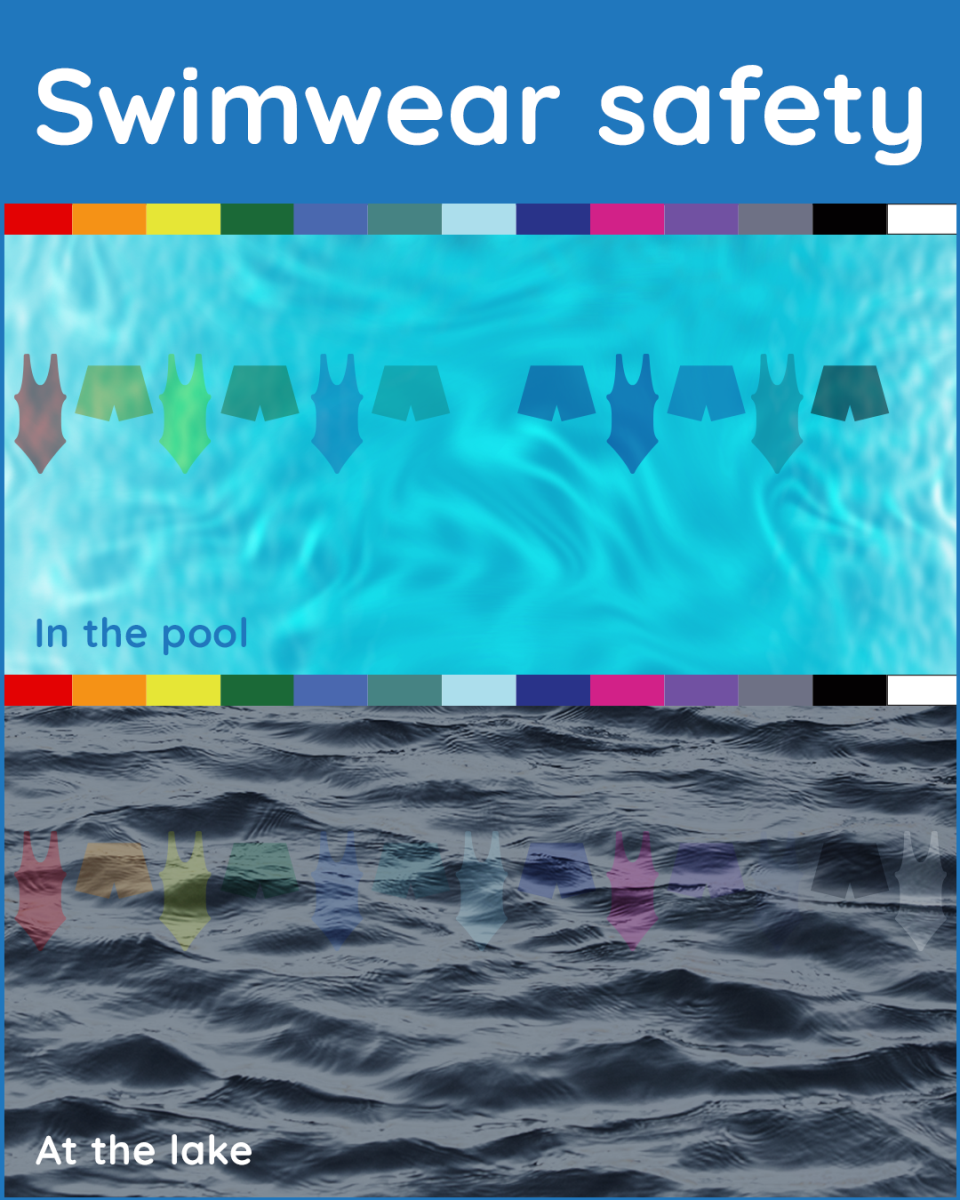
What color swimsuit is safest?
No matter where your water fun takes place, brightly colored swimwear can help you see someone who may be in danger.