
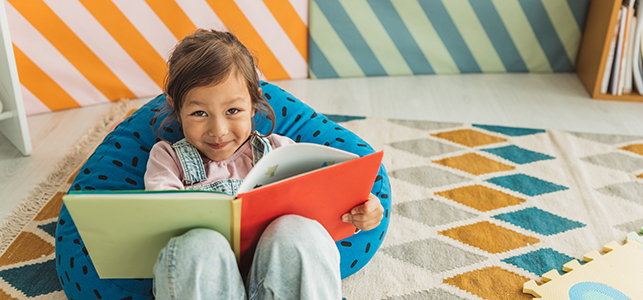
Managing big feelings can be hard for anyone at any age to master. Dr. Mudit Kumar, child and adolescent psychiatrist at our Virginia Treatment Center for Children answers these 7 questions about calming corners and how beneficial they can be.
What is a calming corner and who can benefit from having one?
A calming corner is a safe, cozy space where a child can go to pause, regulate their feelings and practice calming skills. It can benefit toddlers, school-age children, teens and especially children who feel overwhelmed, anxious, angry, overstimulated or emotionally flooded.
The calming corner works best when introduced during calm moments, not during a meltdown. Parents should teach and practice how to use it ahead of time. The goal is not to stop feelings, but to help children feel safe enough to understand and manage them.
Can you describe the difference between a calming corner and a space used for time-out?
A calming corner is not a punishment. It is a supportive space where a child learns they can take a break and calm their body.
Time-out is often used to separate a child after they misbehave. A calming corner is used to help a child build emotional awareness and regulation. The tone matters: it should feel caring, not isolating or shame based.
What type of sensory components should it include?
Keep it simple and soothing. Helpful items may include soft pillows, a small rug, dim lighting, stuffed animals, fidget toys, stress balls, weighted lap pads, calming books, emotion cards, breathing visuals, noise-reducing headphones or sensory bottles.
What type of items should you avoid?
Avoid screens, loud toys, overstimulating lights, messy items, sharp objects, breakable items or anything that becomes a distraction rather than a calming tool. Also, avoid putting the child there in anger or using it as a threat.
While it can be used for toys and playing, what are the more beneficial ways the calming corner can be used?
The best use is for practicing emotional skills: naming feelings, taking deep breaths, using coping cards, squeezing a stress ball, reading a calming book, drawing feelings or taking a short break before problem-solving. Parents can also model using it by saying, “I’m feeling frustrated, so I’m going to take a calming breath.”
Is it possible for more than one child to use the calming corner at a time?
Yes, but only if the children can stay calm and respectful together. For younger children or siblings in conflict, it is usually better to have one child use the space at a time, so it does not become another place for arguing.
How can it be beneficial for children who know how to self-regulate?
Even children with good self-regulation benefit from having a predictable place to reset. It reinforces healthy coping, gives them independence and helps them recognize early signs of stress before emotions escalate.