
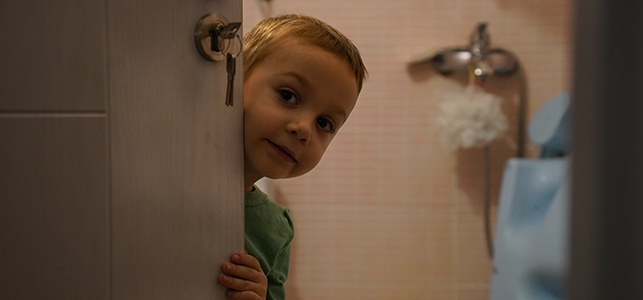
Many people assume only women who have experienced childbirth have pelvic floor problems but everyone has a pelvic floor and everyone can experience dysfunction – even kids. Occupational therapist Kelsey Farmer tells us what to watch out for and how pelvic floor therapy can relieve your child’s toilet troubles.
Once kids are done potty-training, we often think bathroom business should be smooth sailing. But there are many instances when pelvic floor muscles don’t work the way they should, which causes going to the bathroom to impact all aspects of everyday life.
Signs your child may have pelvic floor issues
- Constipation
- Holding it in instead of going to the bathroom
- Pain or discomfort when pooping
- Standing to poop or using another position that may seem ‘abnormal’ to adults
- Requesting a diaper to poop in even though they no longer wear diapers at other times
- Poop streaks in their underwear that they don’t notice
- Decreased awareness of the sensation to pee or poop
- Urinary incontinence or urinary urgency
- Difficulty peeing
- Frequent urinary tract infections
- Bedwetting after age 8 or after being dry at night for a period of time
When constipation is the culprit
“Constipation can irritate the pelvic floor muscles and make it hard for a child to control their muscles and feel the urge to pee or poop,” Farmer explained. “Holding pee and poop for too long can also irritate the pelvic floor and lead to difficulty with pelvic floor coordination.”
So why would your child be choosing to hold it in?
“Some kids are scared to use the toilet or use an unfamiliar toilet. This can lead to constipation and pelvic floor dysfunction as well,” she said. “Families often come in and tell me their child never wants to go to the bathroom when asked and then has a leak a few minutes later. This is super common. Working to manage constipation can improve pelvic floor coordination and improve a child's ability to sense the urge to go to the bathroom.”
The constipation that results from a child’s urge to hold it can make matters worse.
“Constipation can make having a bowel movement really uncomfortable, so kids tend to try to avoid it when they’re experiencing constipation,” Farmer said. “When that improves, parents report that their child is more willing to use the bathroom, will go without being prompted and can sense the urge to go to the bathroom more consistently.”
The benefits of pelvic floor therapy
Pelvic floor therapy can help prevent this from becoming a never-ending cycle.
“People are sometimes nervous to attend pelvic floor therapy but the therapists at CHoR work to meet your child where they are to help them feel comfortable in therapy,” explained Farmer. “We know talking about the bathroom can be uncomfortable and work to help kids and their families feel at ease in our sessions.”
Here are some of the strategies they use:
- Make it fun: Toys and books help to teach kids how the intestines and bladder work and make going to the bathroom less scary.
- Relaxation strategies: It's important to relax our muscles when going to the bathroom. This can be hard! The therapist will teach your child ways to help their muscles relax so they can let all the pee and poop out.
- Talk about positioning: Did you know putting your feet flat on a foot stool so that your knees are above your hips can make it much easier to go to the bathroom? The therapist will help your child get used to this position.
- Create routines: Our intestines and bladder love schedules. Therapists will work with you and your child to create a toileting schedule that makes the most sense for your family to help keep the bowel and bladder happy.
- Biofeedback: Biofeedback is a fun video game that can help your child’s pelvic floor muscles learn how to go to the bathroom more easily.
Letting your child know that bathroom issues are a common problem
“Helping kids understand they’re not the only ones who have trouble is really important,” Farmer said.
It’s also important not to place blame.
“Many grownups assume their child's difficulty with the bathroom is behavioral or intentional, and often there is much more to the story,” Farmer explained. “Pelvic floor therapy can help figure out why your child's symptoms are present, so we can work to decrease them and make your day-to-day life less stressful.”
It’s easy to take something like going to the bathroom for granted, but when it’s not going well it impacts everything.
“I love being an OT because my job is to help people participate in activities they find meaningful,” Farmer explained. “When someone has difficulty with the bathroom, it makes everything challenging and more stressful. They start to avoid things they love because the stress surrounding the bathroom outweighs everything else.”
That’s why her work makes such a huge difference.
“I love hearing patients come into sessions telling me that they were able to go to summer camp, have sleepovers, go on vacation, see a movie, go to the store, play with friends and attend school without having to worry about the bathroom.”