
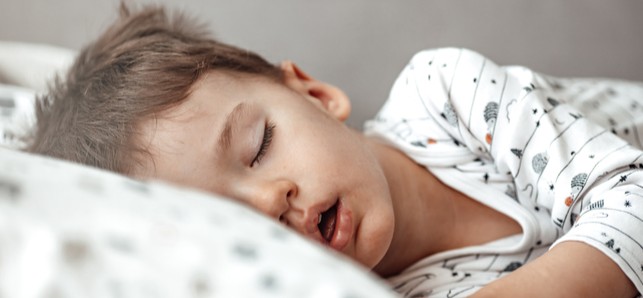
It is very common for kids to snore, but there are times when it can be a symptom of something more serious. Dr. Pearl Yu, a pulmonologist and sleep specialist at CHoR and our medical director of sleep medicine, answers these 5 questions about snoring and when it could be a sign of a more serious health problem.
How common is it that kids snore?
Snoring is very common in children, in fact 10 to 20% of children will do it at some point. The most common causes are big tonsils and adenoids, poorly controlled allergies, as well as colds or upper respiratory infections.
What are ways parents can help their kids with mild snoring?
If the snoring is due to allergies, treating those allergies can provide relief. You can remove triggers for allergies if they’re known and use age-appropriate over-the-counter medications to ease symptoms.
Positional therapy is also helpful. If you notice that your child only snores when they’re sleeping on their back, discourage that by sewing a tennis ball or something uncomfortable into their pajama shirt so they won’t feel inclined to roll onto their backs.
When should a parent be concerned about snoring?
If you notice your child stops breathing or witness them choking, gasping or snorting during sleep, you should seek advice from their pediatrician. Other causes for concern are when their sleep is restless, they wake up tired consistently despite having an appropriate amount of rest or you notice worsening behavior. Snoring could be a sign of a more serious disorder that affects many other aspects of a child’s life, not just their health. Aspects like learning, emotions, cognition, relationships to peers and quality of life can be impacted.
What type of health concerns could snoring indicate?
In some instances, snoring could be a sign of obstructive sleep apnea syndrome, a sleep disorder where there is repetitive upper airway collapsing or narrowing during sleep, which leads to obstructed breathing.
Snoring could also be a sign of a nasal blockage or narrowing of the nasal passage due to polyps or a foreign object. Untreated sleep apnea can lead to heart, lung and blood pressure issues.
What kind of tests can determine if snoring is a symptom of something more serious?
Your child’s primary care doctor can run tests to find out if allergies need to be treated more aggressively, if the snoring is related to any anatomical issues, or if your child needs to be referred to an ear, nose and throat doctor or a pediatric sleep specialist. A detailed history would be taken, a physical exam performed as well as a diagnostic sleep study if needed.
The good news is that all these things can be treated effectively. We urge parents to review concerns with the primary care physician and get guidance about what to do next.
CHoR is home to the only dedicated children’s sleep clinic in the region. Learn about the conditions we treat.