
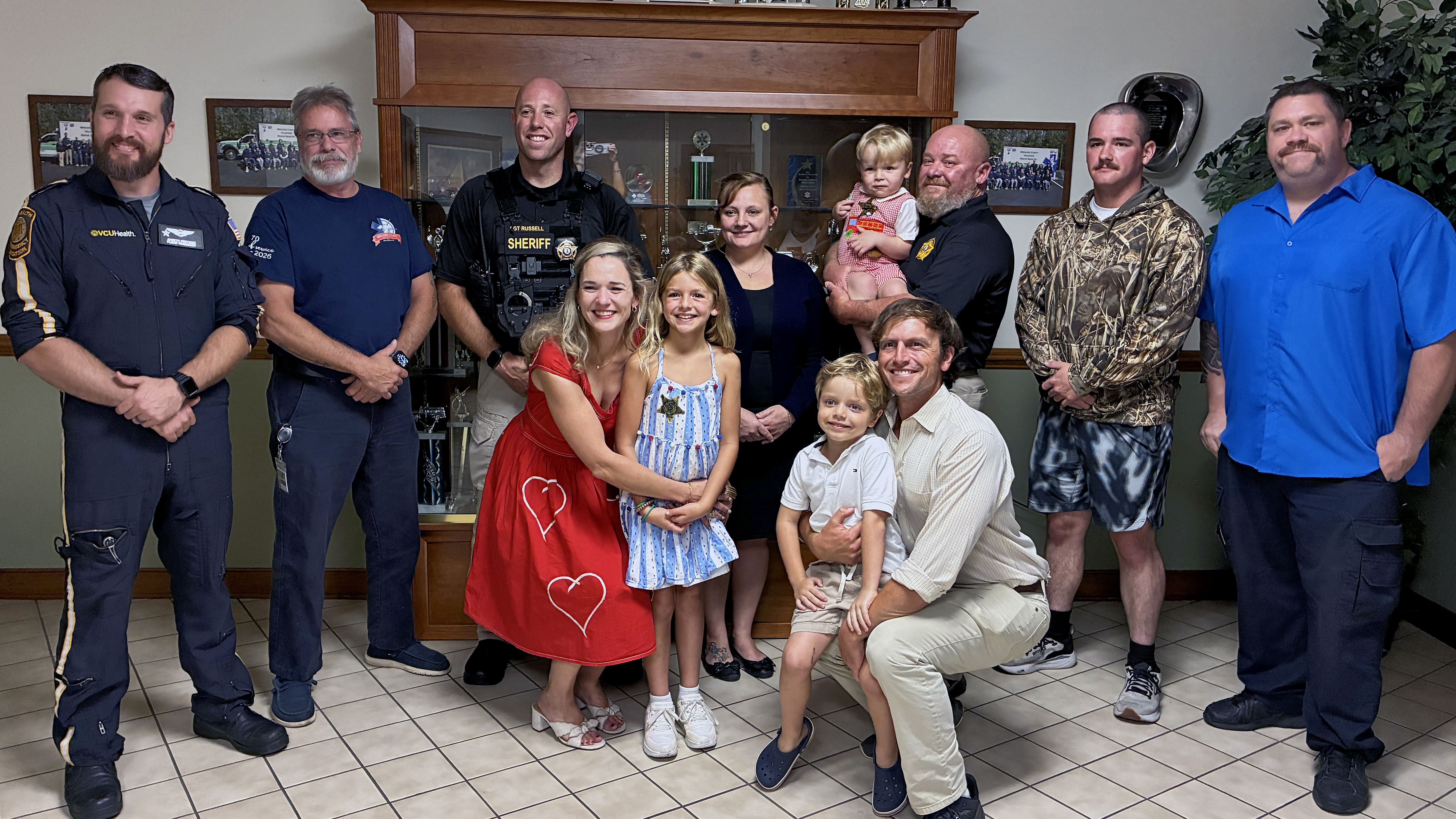
It’s been nearly 6 months since Michael and Juliet Louthan endured the most frightening time of their lives. During a visit with family in Saluda back in May, they found their then 2-year-old son Johnny unresponsive and floating in a swimming pool. Middlesex County first responders and VCU Health’s LifeEvac team worked quickly to stabilize and transport the toddler to CHoR. He has since made a full recovery.
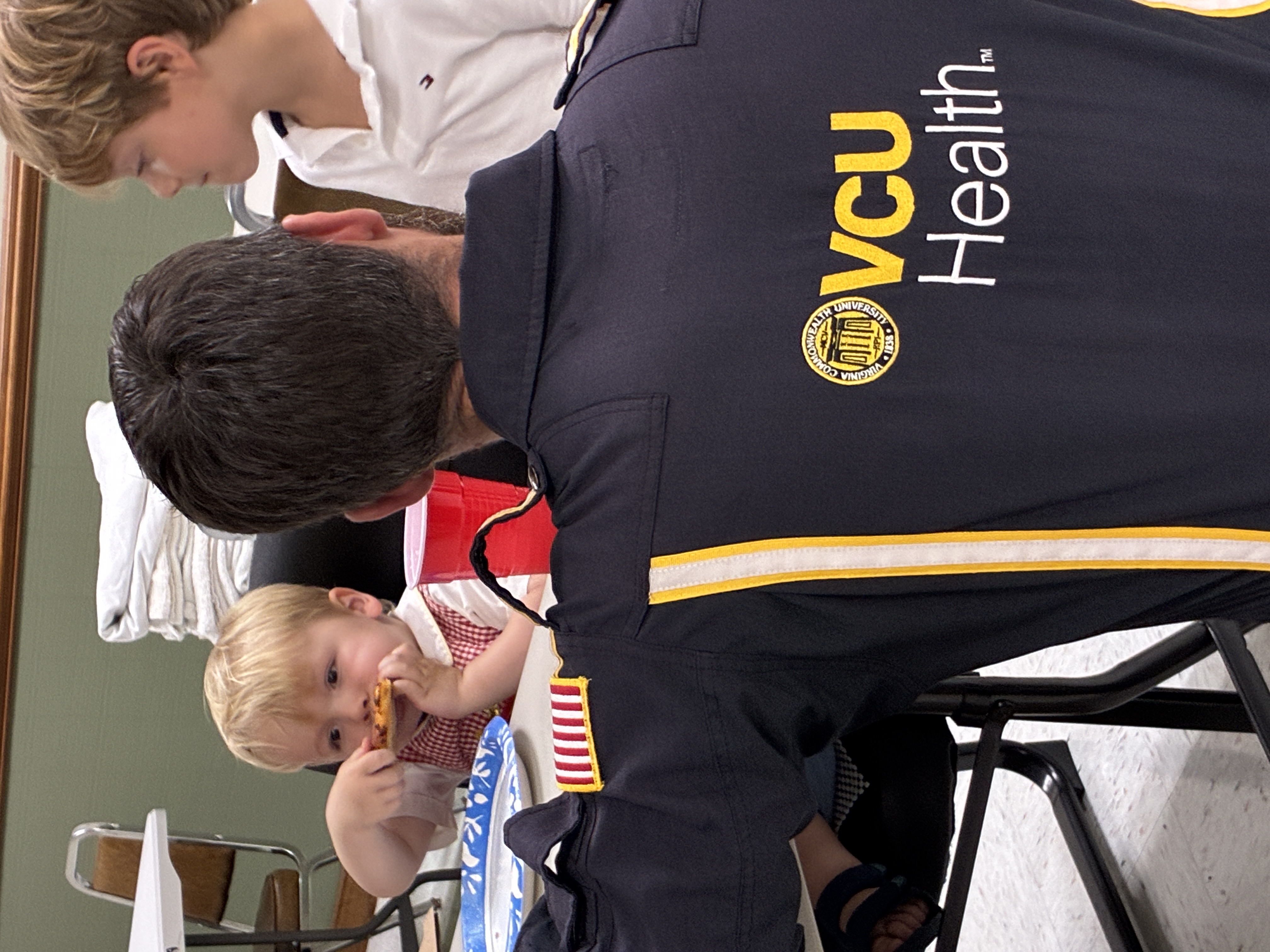
The happy tears started flowing almost immediately as the Louthan family walked into the Middlesex Volunteer Rescue Squad building in early October. Their little boy, now 3 and wearing a red and white romper, entered the room shyly, wondering what all the fuss was about, not fully realizing they were all there to celebrate him.
A terrifying discovery
The Louthans, who are from Richmond, were visiting Johnny’s maternal grandparents in Saluda on May 16. Family members playing outside realized Johnny was no longer nearby. A quick search ensued, and the toddler was found floating face down in the backyard pool. He had been there for an unknown amount of time. His mom, Juliet, jumped in immediately and pulled him out of the water. Johnny’s dad, Michael, started performing CPR on his little boy, with some help from Johnny’s mom and grandmother, while 911 was called and until help arrived. Michael was able to get him breathing again and guided the others during those unbelievable tense moments.
“We got a call for the possible drowning of a child, and we were told he was unresponsive, not breathing,” recalled Kevin Mills who works for Emergency Services Solutions, Inc., the company contracted to provide EMS services for Middlesex County. “We got there two minutes after the first ambulance got there and he was conscious, but not breathing very well on his own.”
Sheriff’s deputies, who also responded to the call, immediately coordinated with dispatch to call in a helicopter from VCU’s LifeEvac team. Ambulances rushed Johnny to the sheriff’s office, which is one of the preset locations the helicopter could land, to transport Johnny to CHoR as quickly as possible.
Critical care in the air
It took about 15 minutes for the LifeEvac crew to arrive, and they knew little Johnny wasn’t out of the woods yet.
“The EMS team had him intubated by the time we got there, but he was still critically unwell,” Garett Freeman, the VCU Health flight paramedic remembered. “They did a rock star job and everything that could have been done was done, but there was still a lot of work to do.”
While Johnny had a pulse and was breathing, his heart rate was slowing and oxygen saturation was dangerously low. During the flight from Middlesex County to CHoR they were able to get his blood pressure up. They still had difficulty with his oxygen levels but did get the first positive signs of brain activity.
“The first sign we had, he actually started winking his eye and grimacing a bit which was encouraging,” recalled Garett, “especially for an unknown downtime.”
While the flight paramedics took care of Johnny, the pilot was able to comfort his mom even while flying the helicopter.
“I remember Rachel, our pilot, was talking Juliet through everything we were going to do and the whole process,” explained Garett. “Rachel being a mom herself with a kid around Johnny’s age, she was a gift to Juliet that day.”
Johnny’s color started returning to normal as he reached our emergency department and the CHoR team took over from there.
Expert pediatric care at CHoR’s Level I pediatric trauma center
Because Johnny’s oxygen levels were so low, getting him to CHoR as fast as possible with the team in the emergency department waiting was the LifeEvac team’s top priority.
Dr. Judith Barto, a veteran in our ED, had been in communication with the flight paramedics and was there when LifeEvac landed.
“When he got here, his oxygen levels were very low, so low I was worried about him having a cardiac arrest or having meaningful recovery,” remembered Dr. Barto. “We had to oxygenate him better or think about placing him on life support. We adjusted his endotracheal tube and pressure settings and started to see improvement.”
But that wasn’t the only hurdle Johnny was facing.
“He was also very cold and with poor blood flow to his organs,” explained Dr. Barto, “so we worked on warming him and improving circulation.”
One more decision allowed Johnny’s oxygen levels to improve rapidly.
“We then decided to re-intubate him with a larger tube so we could get higher pressures, and that worked,” remembered Dr. Barto, “By time he was able to be moved to our pediatric intensive care unit, he went from an oxygen level of 30% to 90% which was a huge win.”
Specialists from multiple departments worked together to help Johnny clear this very important hurdle.
“He was only in the ED for one hour, that shows you how well the team worked with the respiratory and PICU team,” explained Dr. Barto. “The PICU responds to our DELTA Alerts (notifications of patients who are severely injured with unstable vital signs) so they were also present for the stabilization process and ready to take him to the unit for further care which is gold standard for trauma care.”
Now that Johnny was stable, it was a waiting game to determine how much his brain was impacted by the lack of oxygen while he was underwater.
Johnny’s miraculous recovery
After a child suffers an injury like Johnny’s, parents are often understandably eager to find out what the future may look like, but many providers will tell you it can take a while to get an accurate picture of longtime impact.
“Even after successful CPR, he had inhaled water and it was difficult to maintain normal oxygen levels,” explained Dr. Alia Marie Iqbal O’Meara, doctor of critical care medicine in our PICU. “This can affect not just neurologic recovery, but survival.”
Constant monitoring, neurologic exams and continuous EEG (electroencephalogram to monitor brain activity) help doctors determine likelihood of recovery and prepare parents for what’s next, communicating with them every step of the way.
“I always try to just be honest and speak plainly about where we are, what we are certain of, and what we aren’t sure about yet,” Dr. O’Meara shared.
While the doctors did what they are trained to do, Juliet said she put her trust in them but also turned to a higher power.
“I prayed and I prayed and thought, ‘okay, he is alive,’” she explained. “But I asked one of the hospital chaplains, ‘Is it selfish that I want him to be completely okay and not just alive?’ and he said, ‘absolutely not.’ We prayed together and I swear it seems he really is even better than before.”
Juliet said she received the best news 5 days after the incident, when an MRI showed that there was no damage to Johnny’s brain.
“There's a lot of pride in the team here at CHoR, and how we worked together to get this patient back to their family as close to their baseline as we possibly could,” Dr. O’Meara said. “I love when families send us updates with pictures; so many times, we never get to see them without all of the tape and tubes and monitors, and it's always amazing to see what they actually look like, home with their families in the real world.”
An emotional reunion for the adults but an adventure for the kids
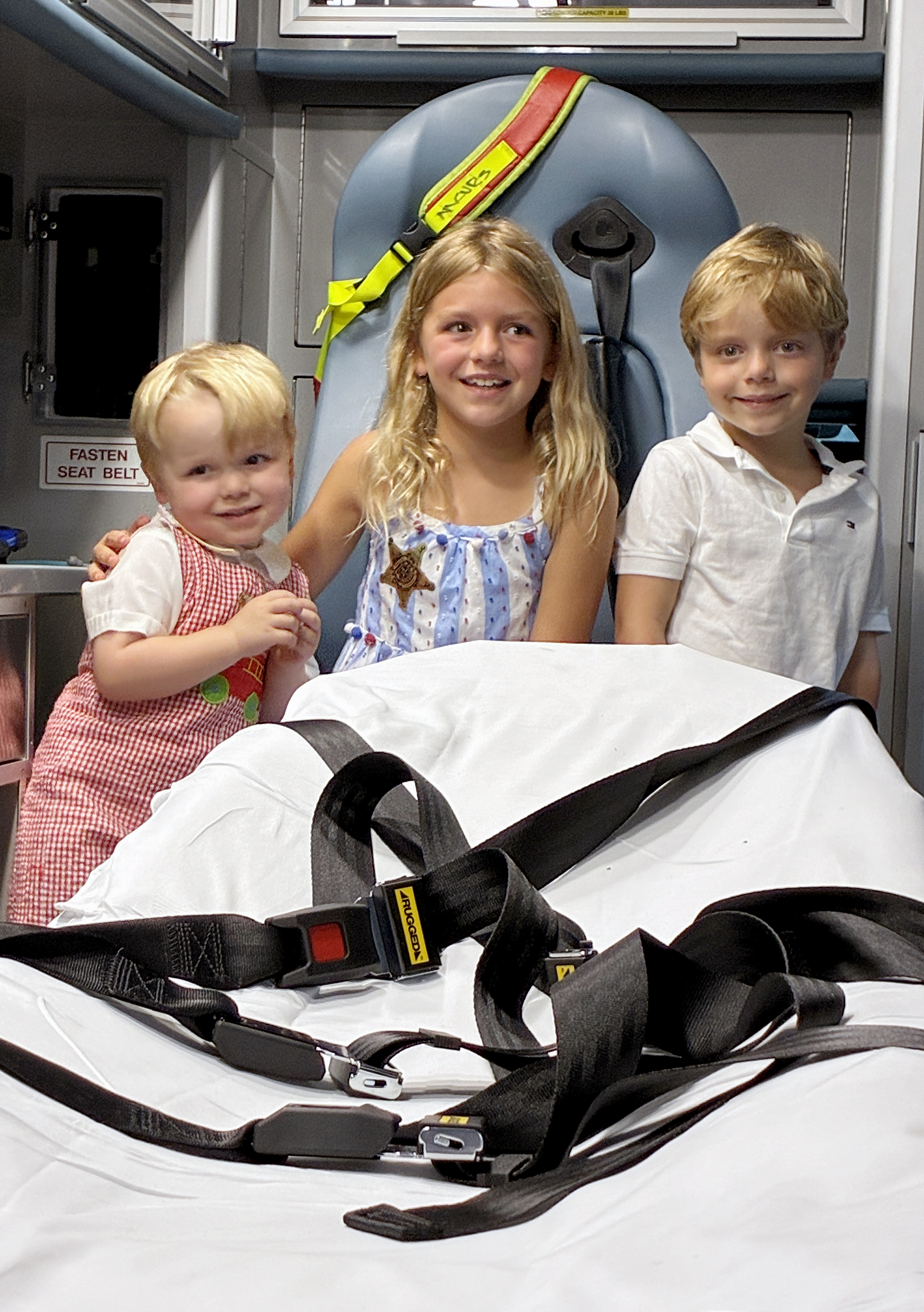
Juliet got the idea for the reunion celebration at another type of celebration: Johnny’s third birthday party in August. As you can imagine, they pulled out all stops and threw a big party for him then. But this other party was for Johnny’s guardian angels.
“Thanks to so many of you in this room, I have had the pleasure of watching my son make an exceptional and miraculous recovery, gleefully blow out candles at his third birthday party and walk into his first day of preschool like he owned the place,” Juliet said. She even shared that Johnny has been swimming since the incident and shows no residual fear at the pool.
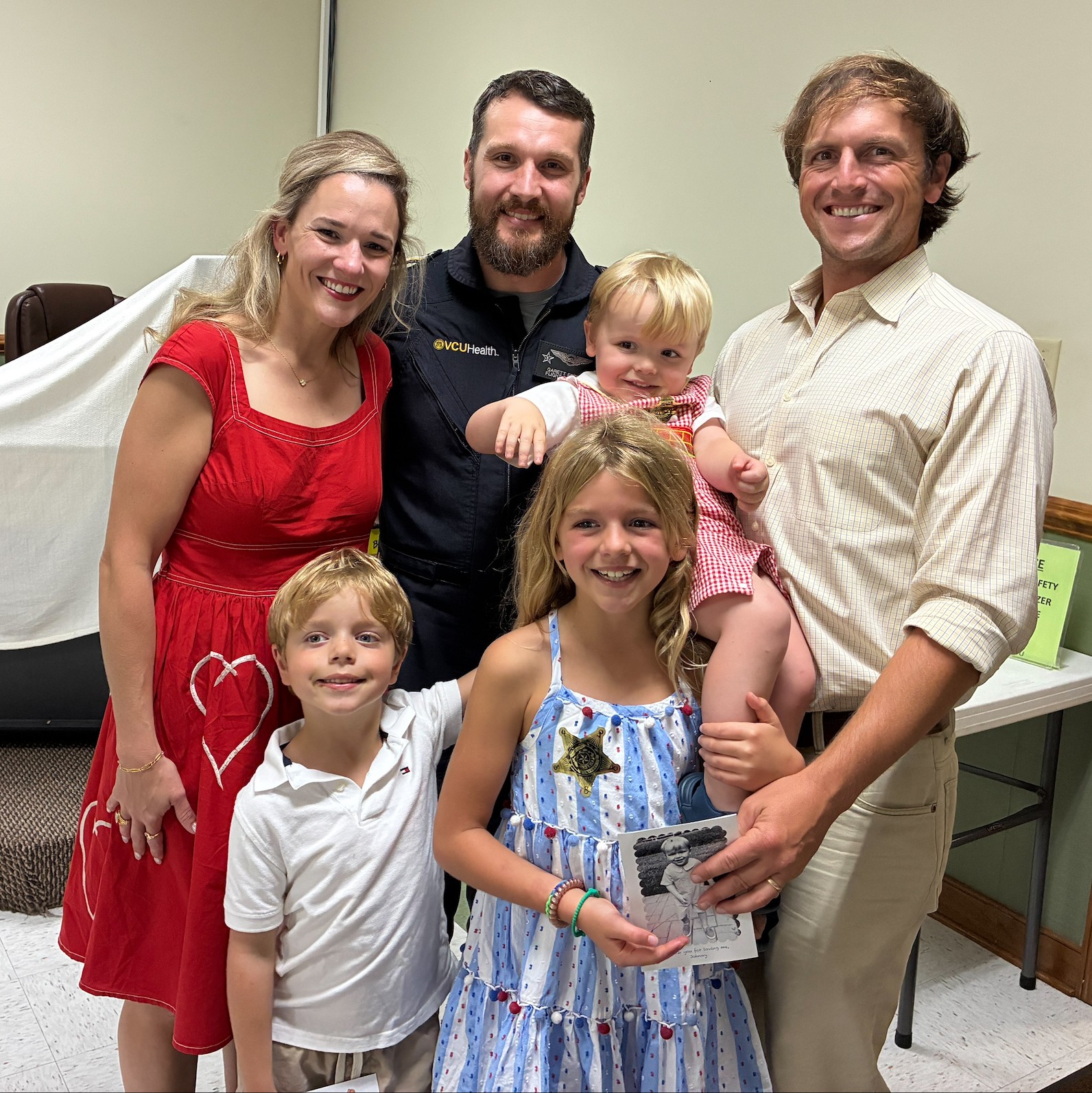
In a thank you card filled with pictures of Johnny she gave to everyone in attendance, she said, “We cannot express how grateful we are for the love, prayers, kindness and support our family received during the most frightening time of our lives.”
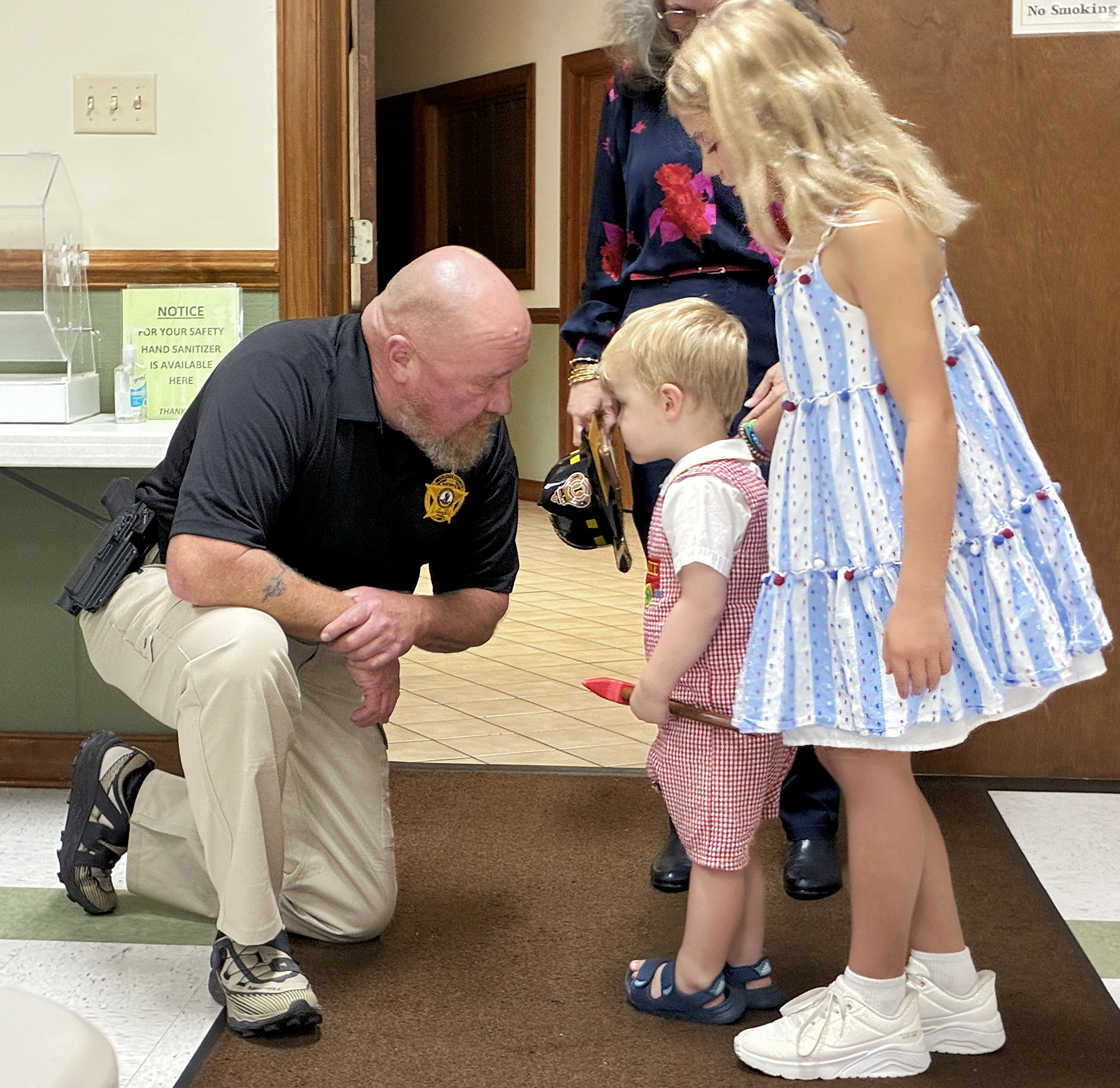
The gathering involved a lot of catching up and a lot of hugs, cards, gratitude and even pizza for attendees.
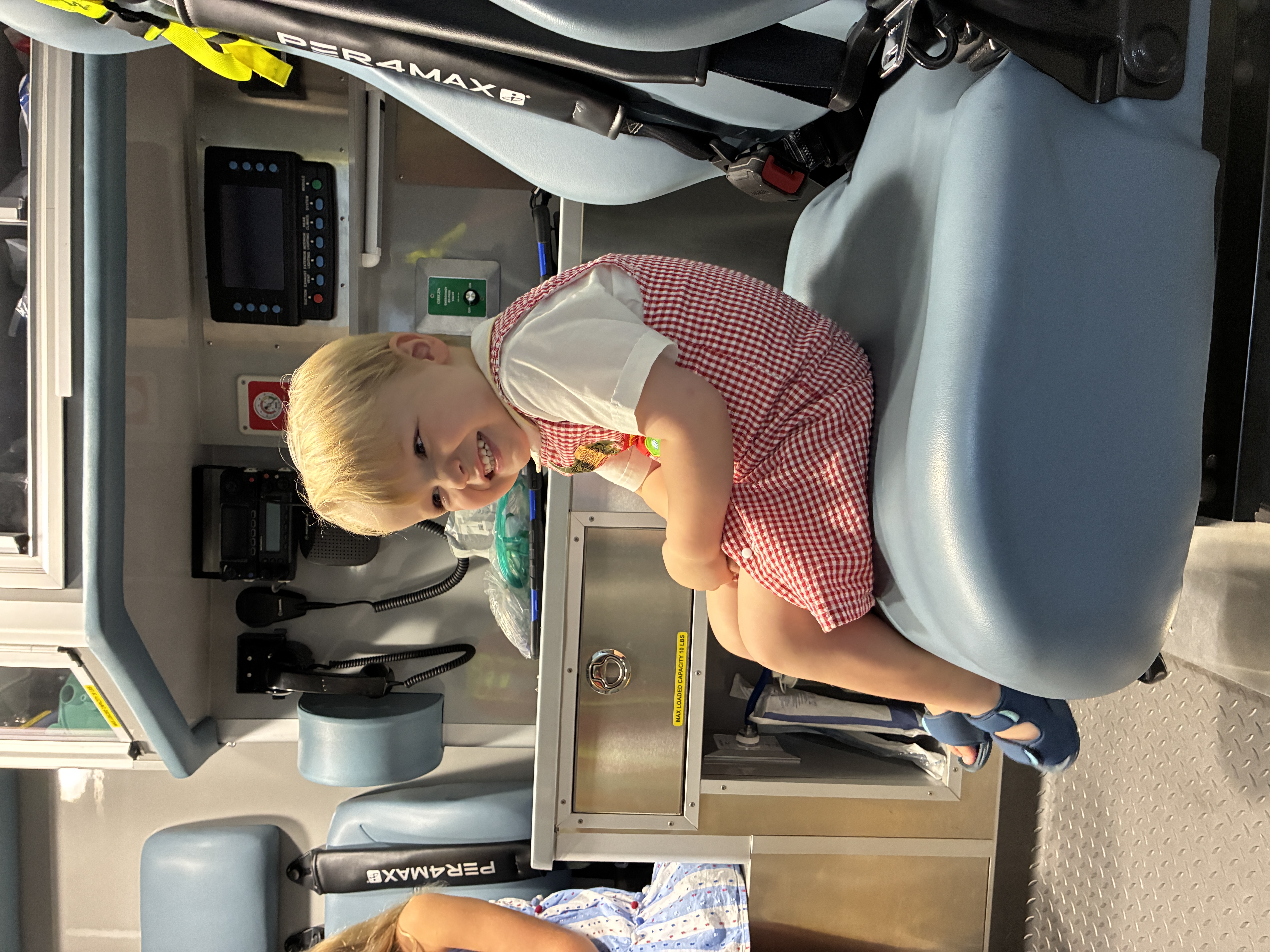
Not only that, Johnny, his older sister Frances and big brother Reaves were shown around the rescue squad and even got a tour of an ambulance similar to the one Johnny was taken care of in months ago.
Everyone was so thankful to be there and eager to celebrate a happy ending to such a scary story.
Juliet summed up just how grateful she was in one simple sentence.
“You not only saved Johnny's life that day, you saved my life too.”