
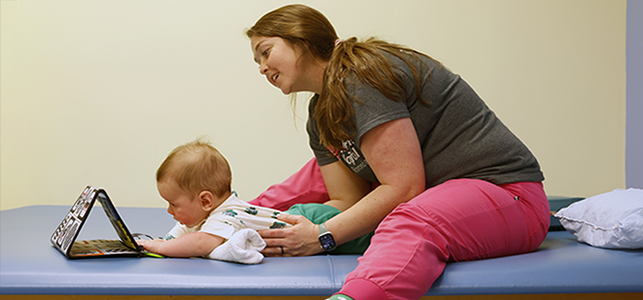
A conversation with pediatric physical and occupational therapists Devin Arritt, PT, DPT, Michelle Froede, DPT, ATP, CPST and Marta Parr, OTD, OTR/L about the use of 'container devices’ at home
What baby gear can be considered container devices?
From swings to bouncers or activity seats, baby gear can feel like a life saver for you as a parent when you inevitably need a few handsfree minutes to get things done. You have a ton on your plate! But therapists tend to look at them through different lenses.
Michelle Froede, physical therapist at our Brook Road Pavilion, describes these devices as “something that holds a baby still or in a position that they can’t do themselves.”
Devin Arritt, physical therapist at our Glen Allen Therapy Center, describes them as “devices that restrict a child’s movement.” She goes on to add that “some of them are for safety, and some are necessary.”
Marta Parr, occupational therapist at our Petersburg Therapy Center, says “they are often used in an attempt to keep a baby safe or entertained while a caregiver is occupied.”
Some examples of this gear include:
- Jumpers
- Baby walkers
- Bouncers
- Swings
- Carriers
- Chairs and seats
- Highchairs
- Car seats
It’s important to note these devices aren’t “bad,” and it’s normal to use them at some point during the day so you can cook a meal, take a shower or just have a few minutes of handsfree activity. The key isn’t avoiding them altogether but being mindful of the types of devices and amount of time your child is spending in them.
Why balance matters when it comes to your baby’s daily activities
If babies spend too much time in container devices, it can have an impact on how they develop skills and movement patterns in childhood. When babies are kept in one supported position for long periods of time, they have less opportunity to move freely, explore their movement patterns and develop gross motor skills. This may influence the ways a child develops strength and coordination.
Froede says they may “increase the risk of developmental delay and delay of reaching gross motor milestones, and that risk is increased when you have a child who is already at risk of that.”
Arritt, Froede and Parr discuss some potential concerns therapists see with extensive use of these devices including:
- Delayed gross motor milestones due to less time exploring free movement
- Changes in strength or posture due to time spent in supported positions
- Increased risk of plagiocephaly (flat spots on the head)
- Increased risk of torticollis or tightening of neck muscles
- Joint stress or risk of altered joint development due to repeated joint impact from jumping devices
- Abnormal walking patterns from walker devices
The good news is that many of these concerns are not permanent, and use of these devices doesn’t guarantee any of these concerns becoming reality. They can often be addressed through positioning, extra practice or physical therapy if necessary.
Is baby gear always bad?
In short, this type of baby gear isn't always bad. Car seats and highchairs, for example, are important for keeping your child safe. In addition to providing you with a quick break, Parr gives some examples of times baby gear can be beneficial:
- Providing alternative positioning for story time, feeding and play with siblings
- Babies with reflux or other medical conditions may benefit from certain gear that offers a better position for needs
- Baby wearing in a carrier is helpful when you need to complete household tasks, grocery shop or engage with other children in the home
- Also wonderful for co-regulation and soothing
She says “ultimately, for short durations and with proper positioning, some baby containers may offer the child and family many benefits.”
Therapist tips for using baby gear
So, what are some of our therapists’ tips for using this gear?
- Timing is key
- Arritt, Froede and Parr agree that limiting time spent in this type of gear is important, recommending 20-30 minutes a day or less.
- Be picky
- “There are devices that are better than others, and this would be a great discussion to have with your provider,” says Froede, “if we are going to be using a device, make sure it’s a device that they’re developmentally ready for.”
- Some devices are advertised as being developmentally appropriate when they’re not.
- Arritt adds that “there are some devices that allow the child to explore without being super restricted.”
- Parr says proper setup and positioning are important when selecting baby gear.
Your provider can help you understand what gear may be developmentally appropriate and beneficial for you and your child. Don’t be afraid to ask questions.
Encouraging baby’s movement and exploration
One of the most beneficial alternatives to baby gear is time spent moving freely on the floor.
Parr says, “Choosing floor time over most containers will help the baby build core strength, neck strength and extremity coordination. Floor time allows a baby to engage in natural sensory exploration and can also help prevent flat spots on the head.”
For many families, safe places for kiddos to engage in floor time or tummy time can be a concern. In homes with pets, siblings or limited floor space, Froede and Arritt suggest getting creative with the space you do have. Tools like pack and plays, play yards or baby gates may be useful for offering a safe space for your child to explore movement and objects while still maintaining safe boundaries.
Quick takeaway for busy parents of babies
Arritt puts it simply, “Being a parent is hard and if you need a few minutes to use these devices, you shouldn’t overthink it. It’s like dessert, everything in moderation.”
By Hannah Drake, OTS with contribution from Devin Arritt, PT, DPT, Michelle Froede, DPT, ATP, CPST and Marta Parr, OTD, OTR/L