
A pediatric infectious diseases expert decodes declining measles vaccination rates, a lost elimination status and what this means for public health
Measles cases were nearly unheard of in the United States over the last two decades. With outbreaks now occurring in several regions, the U.S. has lost its measles elimination status and the Pan American Health Organization is urging stepped up efforts to stop the spread of this preventable illness in its tracks.
Dr. Suzanne Lavoie, chair of our Division of Pediatric Infectious Diseases answers 8 key questions about what's happening with measles and what we should do next.
How do people get measles?
Measles, also known as rubeola, is a virus that is spread by both person-to-person contact and by airborne spread. It is one of the most infectious microorganisms and can infect 9 out of 10 susceptible people who are exposed. In addition, it can linger in the air for up to 2 hours after someone who is infected has been there. Unimmunized and non-immune individuals who breathe in the virus are at risk of acquiring disease.
What are the signs and symptoms of measles and how can you tell the difference between measles and other common infectious diseases?
Measles is a viral illness characterized by:
- Fever
- Rash
- Cough
- Coryza (inflammation of the mucous membranes in the nasal passages and upper respiratory tract)
- Conjunctivitis (pink eye)
In a classical case, after entering the upper respiratory tract there is an incubation period of 6 to 21 days where people usually have no symptoms. They will then develop fever and malaise followed by conjunctivitis, coryza and cough. Some may develop Koplik spots (small white or bluish-white spots) in the mouth in the couple of days prior to fevers.
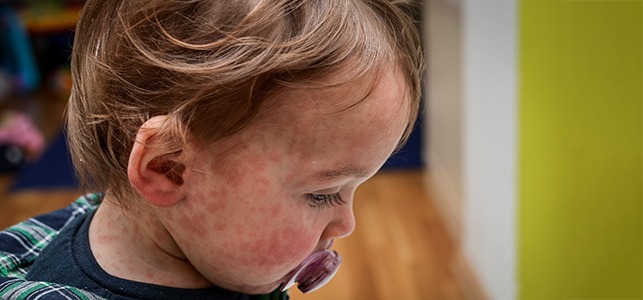
Fevers as high as 104 and above can occur. This phase typically lasts 2-4 days and is followed by development of the rash, which usually starts on the face and spreads downward. They may also develop swollen lymph nodes and splenomegaly (enlarged spleen). Recovery usually starts several days after the onset of rash but it may take longer. Ongoing or worsening symptoms, including fever, beyond this time may suggest a measles associated complication.
Because the symptoms are similar to other viral infections, outside of an outbreak it can sometimes be difficult to tell the difference between measles and other viral illnesses. However, the high fever with conjunctivitis, coryza and cough, and a rash should raise suspicions for measles, particularly in a person who wasn’t vaccinated.
What does testing for measles look like?
There are several ways to test for measles to confirm the diagnosis including serology (looking for early antibody formation against the virus, called IgM antibodies), viral culture of secretions and detection of measles virus RNA in secretions or blood.
When we’re evaluating a child for measles, we’ll typically draw blood, swab their nose and/or throat and collect urine for testing.
How is measles treated?
We do not have a specific medication that can fight the measles virus. For most people with mild to moderate disease, treatment is supportive. That means treating their fever, ensuring they don’t become dehydrated and watching for development of complications.
Complications can include bacterial pneumonia, otitis media (ear infections), diarrhea or other GI complications, and neurological syndromes like encephalitis. Measles infection can lead to immune suppression, making the person more susceptible to other infections even after recovery from measles. In rare cases, an illness called Subacute sclerosing panencephalitis (SSPE) – a progressive brain disorder – can occur years after a natural measles infection.
Can people who are fully vaccinated still get measles?
The measles vaccine is very effective. After one injection, 93/100 people will be protected and after two injections, 97/100 people are protected. The vast majority of people who have had measles in the U.S. during this current outbreak have been under or unvaccinated.
Why may people who received the vaccine within a certain range of years need to get a booster?
People who have received two doses of MMR (the measles, mumps and rubella vaccine) are considered immune. There are very few cases where a booster (or re-immunization) may be recommended. One example is in people who have had bone marrow transplantation (or in some cases certain immune suppressing drugs). In these cases the original cells in the body (memory cells) that provided the immunity were destroyed and replaced with cells that don't remember these illnesses. These patients can be re-vaccinated after their immune system has been reconstituted, but this is done in a very thoughtful and deliberate manner.
People who were vaccinated between 1960 and 1964 were given an ineffective vaccine. If they have not been re-vaccinated after that time, they would be considered unvaccinated and would need two doses of an effective vaccine.
What does it mean that the U.S. has been stripped of measles elimination status, and how will this affect public health?
The U.S. being stripped of elimination status indicates that we now have sustained transmission of the virus. This means that unvaccinated or susceptible people have a much higher risk of coming into contact with the virus and becoming severely ill.
We know that there are certain groups of people who cannot get the protection the measles vaccine provides. This includes young infants (under 1 year of age), people who are undergoing treatments that suppress their immune system (like chemotherapy) and people who are born with immune deficiencies. In general, vaccination of about 95% of the population provides that protection. If we drop below that level and have sustained transmission (as we’ve seen for the last several years), we will see more measles not only among those who are unvaccinated, but also among those high risk populations. And, of course, we will have more cases of severe measles and more complications.
In addition, there are many physicians and healthcare providers who have not seen cases of measles in the last 20 years. This leads to a delayed diagnosis and potential for more transmission given the highly contagious nature of this virus.
What should someone do if they suspect they have (or their child has) measles?
The first thing to do is call your primary care provider or pediatrician and describe the symptoms and concern for measles. For someone who is not severely ill, management can often occur in the home. However, the physician may recommend testing for measles.
Your physician may want to arrange a time for you to come into the office that will limit exposure to potentially high risk or unvaccinated individuals. If you or your child are more severely ill, then bringing them to the emergency room is best. Please let everyone know you’re concerned about measles so that appropriate risk limiting activities can occur (i.e., we don't want you waiting in a crowded waiting room). Oftentimes, your primary care doctor can call the ED to give them a heads up you’re on your way.